
Hyaluronic Acid vs Glycerin: Which Drugstore Humectant Actually Works for Dry Skin

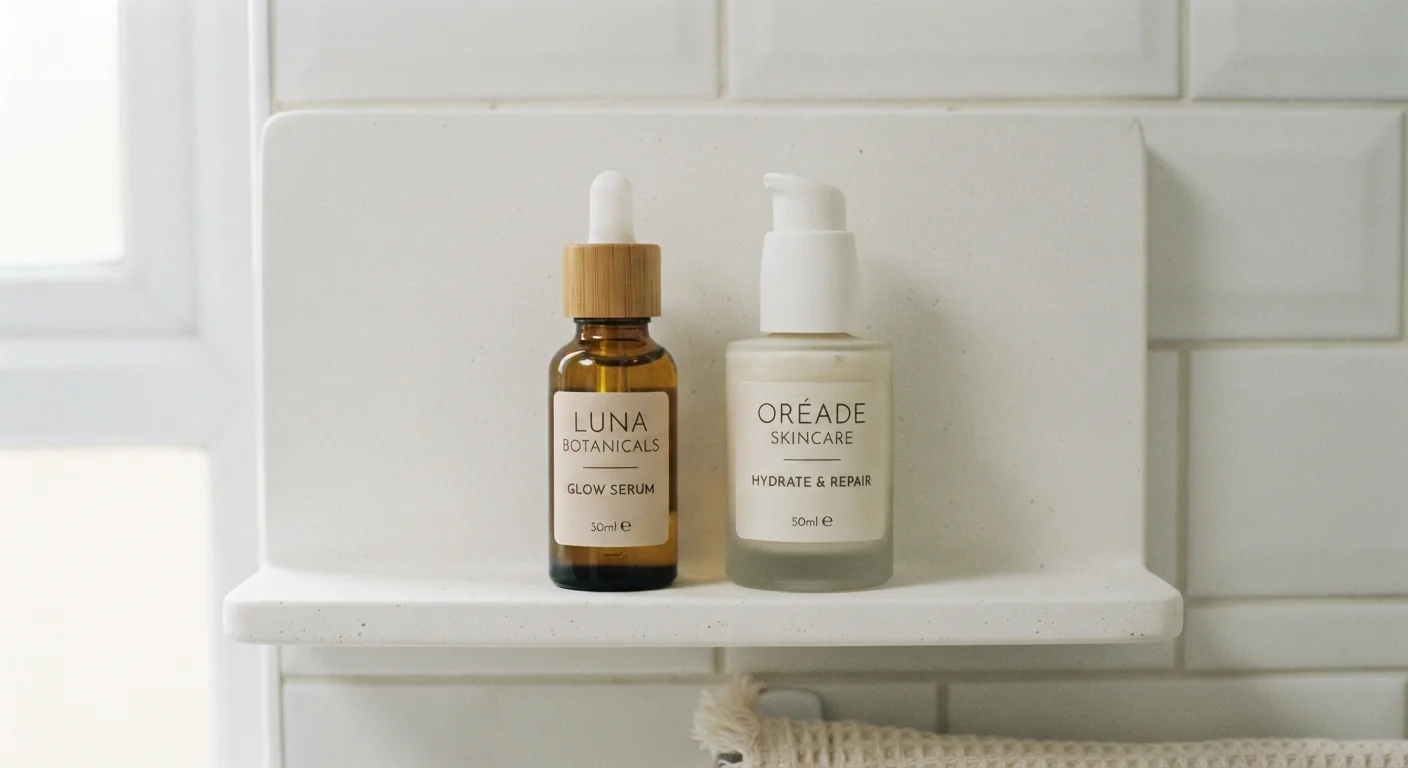
Photo: usewiseguide.com editorial
Key Takeaways
- Both hyaluronic acid and glycerin draw water into the skin; neither seals it there without a follow-up moisturizer.
- Glycerin costs significantly less and appears in far more drugstore formulas, making it easier to find.
- Hyaluronic acid comes in multiple molecular weights that can affect how deep the hydration reaches.
- Neither ingredient alone is sufficient for treating chronic dry skin; both work better layered under an occlusive.
- Skin tolerance to both ingredients is generally high, though concentrations above 50% glycerin can cause irritation.
How humectants work and why that matters for dry skin
Humectants are ingredients that attract water molecules and hold them in or near the outermost layer of skin, called the stratum corneum. When skin is dry, it has lost water faster than it can retain it. Humectants slow that loss by binding to water from two sources: the deeper layers of skin and the surrounding air.
This last point matters in dry climates. When humidity is low, a humectant applied without anything on top can actually pull water up from the deeper dermis and let it evaporate off the surface. That is why most dermatologists recommend following a humectant with an occlusive or emollient, such as a petrolatum-based cream or a lotion containing fatty alcohols, to trap the moisture in place. No humectant, regardless of marketing language, works in isolation for seriously dry skin.
| Criterion | Hyaluronic Acid | Glycerin |
|---|---|---|
| Molecule size | Large to small (varies by weight) | Small, uniform |
| Typical drugstore cost | $8 to $20 per oz (serum) | Under $5 for large bottle |
| Skin penetration depth | Surface to upper layers (weight-dependent) | Upper stratum corneum |
| Texture in use | Lightweight, gel-like | Thick when pure, blends easily |
| Tolerance for sensitive skin | Generally high | Very high at standard concentrations |
| Found in budget moisturizers | Sometimes | Very commonly |
| Works without added products | No, needs occlusive on top | No, needs occlusive on top |
What hyaluronic acid actually does
Hyaluronic acid (HA) is a naturally occurring polysaccharide found in connective tissue. In skincare, it is synthesized through fermentation and sold in various molecular weights. High-molecular-weight HA sits on the surface of skin and forms a thin film that reduces water evaporation. Low-molecular-weight HA can penetrate more deeply into the upper skin layers, though claims about reaching the dermis through topical application remain debated in cosmetic science.
Most drugstore hyaluronic acid serums contain sodium hyaluronate, the salt form of the molecule, which is more stable in water-based formulas and costs less to produce. At typical use concentrations (around 0.1% to 2%), sodium hyaluronate is well-tolerated by most skin types. Products at very high concentrations without a humectant-friendly environment can occasionally feel tacky or cause mild dryness if the formula is not well-balanced.
What glycerin actually does
Glycerin (also labeled as glycerol) is a small, simple molecule derived from plant oils or as a byproduct of soap manufacturing. Its size lets it move into the upper layers of the stratum corneum more readily than large HA molecules. Published cosmetic chemistry research has found that glycerin can help maintain the skin's natural moisturizing factor (NMF), a collection of compounds that keeps skin flexible and hydrated.
Glycerin is effective at concentrations as low as 3% to 5%, which is why it shows up in inexpensive cleansers and body lotions. At concentrations above roughly 50%, glycerin can draw too much water out of skin cells and cause irritation, but this range is far above what appears in consumer products. For dry skin specifically, glycerin-rich creams consistently perform well in controlled studies measuring skin hydration over time.
3-5%
Effective glycerin concentration in skincare
Cosmetic chemistry literature indicates glycerin produces measurable hydration benefits at concentrations as low as 3% to 5%.
0.1-2%
Typical HA concentration in serums
Most commercially available hyaluronic acid serums use sodium hyaluronate in this range for stability and tolerability.
2 sources
Water sources humectants draw from
Humectants pull moisture from both the deeper skin layers and environmental air humidity, depending on conditions.
Side-by-side comparison: cost, availability, and texture
On price, glycerin wins by a wide margin. A 16-ounce bottle of pure vegetable glycerin from pharmacy shelves or online retailers costs a few dollars and can be diluted into existing products or used in small amounts mixed with water as a simple toner. Hyaluronic acid serums at drugstore prices typically range from around $8 to $20 for a one-ounce bottle, though concentrations and molecular weight mixes vary significantly between products.
Availability is similar: both appear at Target, Walmart, CVS, and similar stores, either as standalone serums or as active ingredients listed on moisturizer labels. In terms of texture, HA serums feel thin and gel-like, while pure glycerin is thick and viscous when undiluted. Most shoppers encounter glycerin already blended into a cream or wash, which removes the texture issue entirely.
Neither ingredient has a strong scent, which is useful for those with fragrance sensitivities.
Reading ingredient labels at the drugstore
Choosing based on your routine and skin type
For someone building a simple, low-cost routine, glycerin is already present in most affordable moisturizers and cleansers, so there may be no need to add a separate product. Checking the ingredient label for glycerin in the top five ingredients is a quick way to confirm a meaningful concentration.
For someone who prefers a dedicated hydrating step, a hyaluronic acid serum applied to damp skin before a moisturizer is a practical addition. Damp skin is important: applying HA to dry skin in a low-humidity room can have the same backfiring effect described above.
People with very dry or eczema-prone skin should treat either ingredient as a supporting step, not a standalone treatment. A healthcare professional can provide guidance specific to persistent or severe dryness. Both ingredients are generally safe for use during pregnancy, but consulting a healthcare provider before changing any skincare routine during pregnancy is a reasonable precaution.
This article is for general informational purposes only and is not a substitute for professional dermatological or medical advice.
The content provided on our blog site traverses numerous categories, offering readers valuable and practical information. Readers can use the editorial team’s research and data to gain more insights into their topics of interest. However, they are requested not to treat the articles as conclusive. The website team cannot be held responsible for differences in data or inaccuracies found across other platforms. Please also note that the site might also miss out on various schemes and offers available that the readers may find more beneficial than the ones we cover.