
DIY Face Masks: When They Help, When They Hurt, and What Dermatologists Generally Advise

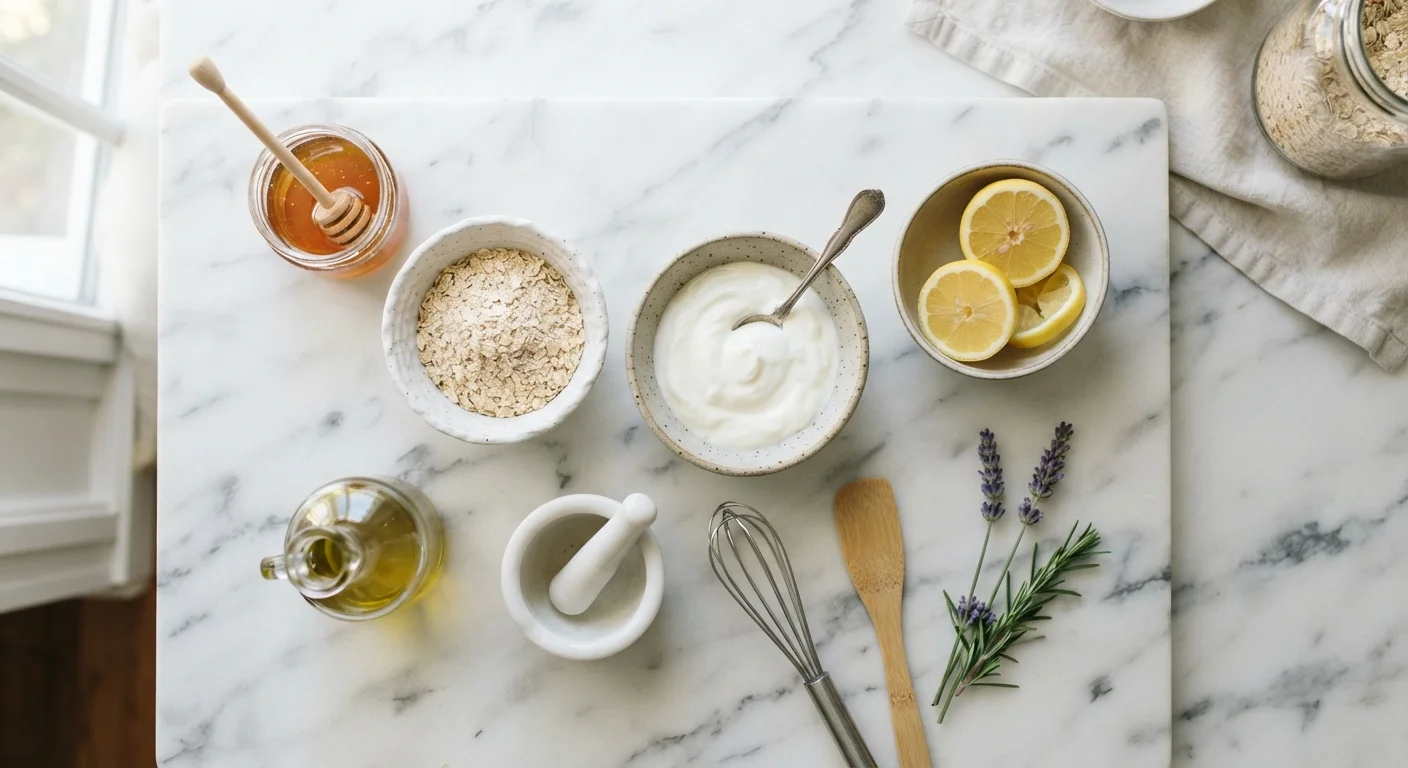
Photo: usewiseguide.com editorial
Key Takeaways
- DIY face masks can offer real benefits for some skin types, but several common kitchen ingredients carry genuine risks.
- Ingredients like lemon juice, cinnamon, and undiluted essential oils can cause burns, irritation, or lasting skin damage.
- Oatmeal and plain honey are among the few home ingredients dermatologists generally consider low-risk for most people.
- A damaged skin barrier from a harsh DIY mask can lead to spending more on corrective skincare products later.
- People with sensitive skin, rosacea, eczema, or active acne should consult a dermatologist before trying homemade treatments.
Lower cost per use than most commercial masks
A spoonful of oatmeal or honey costs a fraction of a packaged mask, making regular use more affordable for anyone on a tight budget.
Colloidal oatmeal is well-tolerated and evidence-supported
Oatmeal has recognized anti-inflammatory properties and is used in clinically formulated products for sensitive and eczema-prone skin. Finely ground plain oats in a mask carry a low irritation risk for most people.
No preservatives or synthetic stabilizers
For people with contact allergies to common cosmetic preservatives, a fresh single-use mask made from a short ingredient list can reduce exposure to known triggers.
Plain honey offers mild antimicrobial properties
Honey has a long history in wound care, and its low moisture activity creates an environment that inhibits some bacterial growth. The effect in a face mask context is modest but generally safe for non-allergic individuals.
Mild exfoliation from plain yogurt
The lactic acid in plain yogurt can gently loosen dead surface cells. The concentration is low enough to make this a reasonable option for people who find commercial AHA products too aggressive.
Lemon juice can burn and damage skin
With a pH around 2, lemon juice is acidic enough to cause chemical burns and post-inflammatory hyperpigmentation, particularly on darker skin tones. It also increases photosensitivity, which raises sunburn risk.
Cinnamon is a documented skin irritant
Cinnamon contains cinnamaldehyde, a compound that can cause contact dermatitis and burning on contact with skin, even in people without known allergies.
Undiluted essential oils cause allergic reactions
Many essential oils promoted in DIY tutorials require dilution in a carrier oil before skin contact. Applied at full concentration, they are a common cause of allergic contact dermatitis and can cause sensitization that persists long-term.
No standardized pH or concentration control
Formulated skincare products are tested at a specific pH and ingredient concentration. Home mixtures offer no such consistency, making outcomes unpredictable even when the base ingredient is generally safe.
Barrier damage leads to higher costs later
A compromised skin barrier can cause lasting sensitivity, dryness, and reactive skin that requires targeted corrective products. The cost of repairing barrier damage frequently exceeds whatever was saved on the original DIY treatment.
Eggs and dairy carry contamination risk
Raw egg whites, a popular ingredient for pore-tightening masks, carry a small but real risk of bacterial contamination on the skin surface. People with dairy or egg allergies face additional risk from these ingredients.
Why DIY face masks appeal to budget-conscious shoppers
Store-bought sheet masks and clay treatments can cost several dollars per single use. At that price, a weekly masking habit adds up fast. Using pantry staples instead seems like a straightforward swap, and the appeal is understandable: the ingredients are already paid for, the process feels transparent, and there are no unfamiliar preservatives or fillers on the label.
The interest in home treatments has grown alongside broader curiosity about ingredient-level skincare. Many people now read product labels and want to understand what they are applying. Making a mask from scratch feels like a logical extension of that awareness. For some ingredients, the logic holds. For others, it does not, and the gap between what feels natural and what is actually safe for skin is wider than most social media tutorials suggest.
If you are building a broader budget skincare approach, see how to layer affordable skincare products for a practical daily foundation before adding any at-home treatment on top.
Potential benefits
Lower cost per use than most commercial masks
A spoonful of oatmeal or honey costs a fraction of a packaged mask, making regular use more affordable for anyone on a tight budget.
Colloidal oatmeal is well-tolerated and evidence-supported
Oatmeal has recognized anti-inflammatory properties and is used in clinically formulated products for sensitive and eczema-prone skin. Finely ground plain oats in a mask carry a low irritation risk for most people.
No preservatives or synthetic stabilizers
For people with contact allergies to common cosmetic preservatives, a fresh single-use mask made from a short ingredient list can reduce exposure to known triggers.
Plain honey offers mild antimicrobial properties
Honey has a long history in wound care, and its low moisture activity creates an environment that inhibits some bacterial growth. The effect in a face mask context is modest but generally safe for non-allergic individuals.
Mild exfoliation from plain yogurt
The lactic acid in plain yogurt can gently loosen dead surface cells. The concentration is low enough to make this a reasonable option for people who find commercial AHA products too aggressive.
The ingredients with the strongest general support are those with a long track record in clinical skincare. Colloidal oatmeal, for example, has well-documented soothing properties and appears in many over-the-counter products designed for sensitive or irritated skin. Plain honey, particularly raw honey, has antimicrobial properties recognized in wound-care research, though applying it as a face mask is a different context than clinical wound treatment.
Plain whole-milk yogurt contains lactic acid, a mild alpha-hydroxy acid (AHA) that can help with surface-level exfoliation at low concentrations. The concentration in yogurt is much lower than in formulated skincare products, which means the effect is gentler but also less predictable. For people who find commercial AHA products too strong, this may actually be a practical middle ground.
Real risks worth knowing before you mix anything
Lemon juice can burn and damage skin
With a pH around 2, lemon juice is acidic enough to cause chemical burns and post-inflammatory hyperpigmentation, particularly on darker skin tones. It also increases photosensitivity, which raises sunburn risk.
Cinnamon is a documented skin irritant
Cinnamon contains cinnamaldehyde, a compound that can cause contact dermatitis and burning on contact with skin, even in people without known allergies.
Undiluted essential oils cause allergic reactions
Many essential oils promoted in DIY tutorials require dilution in a carrier oil before skin contact. Applied at full concentration, they are a common cause of allergic contact dermatitis and can cause sensitization that persists long-term.
No standardized pH or concentration control
Formulated skincare products are tested at a specific pH and ingredient concentration. Home mixtures offer no such consistency, making outcomes unpredictable even when the base ingredient is generally safe.
Barrier damage leads to higher costs later
A compromised skin barrier can cause lasting sensitivity, dryness, and reactive skin that requires targeted corrective products. The cost of repairing barrier damage frequently exceeds whatever was saved on the original DIY treatment.
Eggs and dairy carry contamination risk
Raw egg whites, a popular ingredient for pore-tightening masks, carry a small but real risk of bacterial contamination on the skin surface. People with dairy or egg allergies face additional risk from these ingredients.
The risk side of DIY masks is underreported in online tutorials. Lemon juice is one of the most frequently cited home ingredients for brightening, but its pH sits around 2, far below the range skin can tolerate safely. Direct application can cause chemical burns, hyperpigmentation, and photosensitivity. Cinnamon is another common ingredient promoted for plumping: it is an irritant that can trigger contact dermatitis even in people who have no known skin sensitivities.
Undiluted essential oils are a frequent source of reactions. Even oils described as "gentle" (lavender, tea tree) can cause allergic contact dermatitis in some people. The presence of a natural origin label does not indicate safety for topical use at full concentration.
Damage from harsh DIY treatments often shows up as a compromised skin barrier, which then requires additional products to repair. Common skincare mistakes that damage the barrier are worth understanding before experimenting at home, because the repair costs can exceed whatever you saved on the original treatment.
For a closer look at how specific kitchen staples fare under scrutiny, natural kitchen ingredients used as beauty treatments covers the evidence on individual ingredients in more detail.
What dermatologists generally advise
This article is general information, not medical advice
Board-certified dermatologists generally do not recommend DIY masks as a replacement for evidence-based skincare, but many acknowledge that a small number of ingredients are low-risk for most people. The consistent guidance across published consumer health resources is to patch-test any new ingredient on the inner forearm for 24 to 48 hours before applying it to the face. This applies to homemade and commercial products alike.
Dermatologists also typically caution that pH matters in ways that home cooks cannot easily measure. Skin sits at a pH of roughly 4.5 to 5.5. Many kitchen ingredients fall outside that range, and disrupting skin pH even briefly can weaken the barrier and increase sensitivity. People with rosacea, eczema, psoriasis, or active acne should speak with a dermatologist before trying any at-home treatment, as these conditions involve an already-compromised barrier.
The guidance is consistent with what applies to knowing where to cut back on beauty spending: savings are real only when the alternative does not create new problems to solve.
The content provided on our blog site traverses numerous categories, offering readers valuable and practical information. Readers can use the editorial team’s research and data to gain more insights into their topics of interest. However, they are requested not to treat the articles as conclusive. The website team cannot be held responsible for differences in data or inaccuracies found across other platforms. Please also note that the site might also miss out on various schemes and offers available that the readers may find more beneficial than the ones we cover.