
The Real Cost of a Full Face of Makeup, and Where You Can Reasonably Cut Back

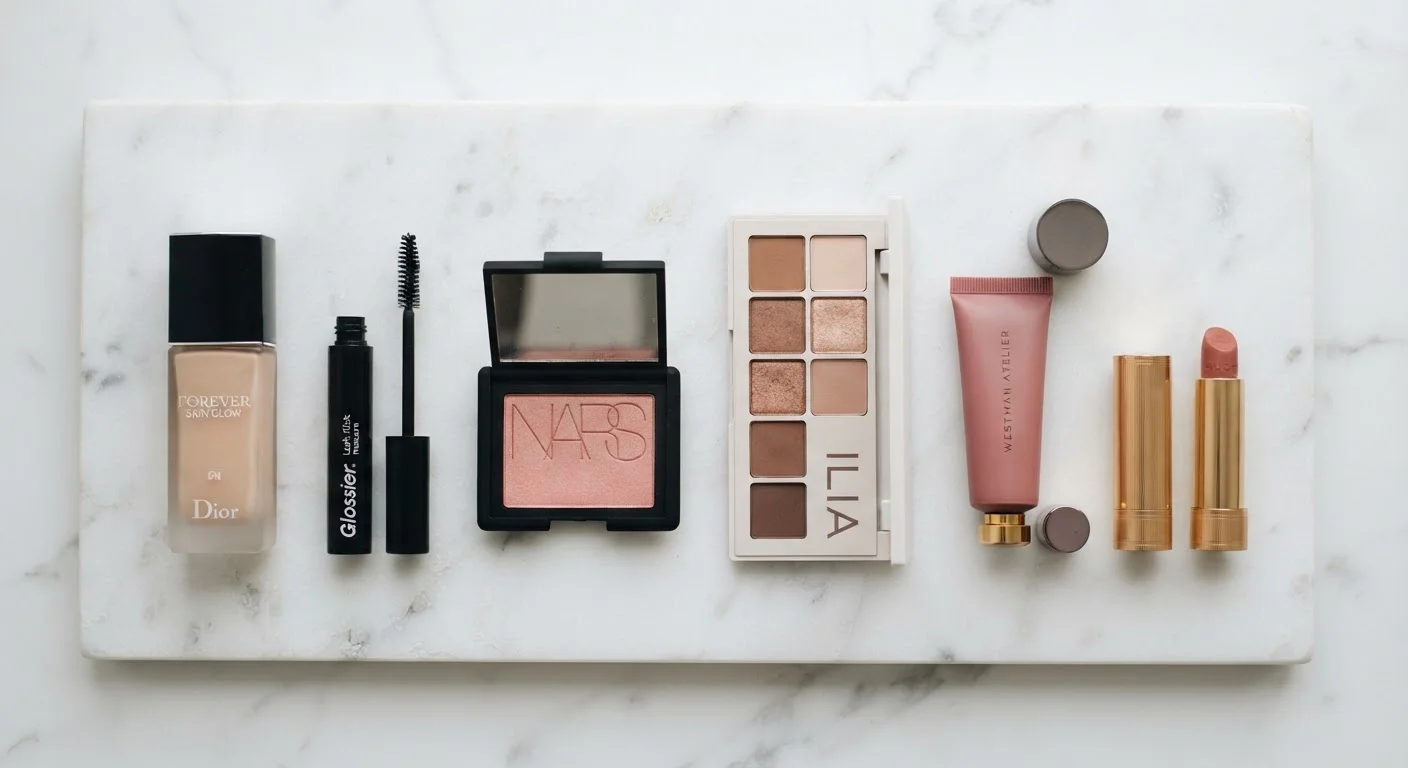
Photo: usewiseguide.com editorial
Key Takeaways
- A full face of makeup can cost anywhere from roughly $50 to over $300 depending on where products are purchased.
- Foundation and concealer tend to have the widest price range and the most formulation variation across tiers.
- Eye products, lip color, and setting powder are categories where affordable options frequently match pricier counterparts in everyday performance.
- Buying fewer, more versatile products often saves more money than switching brands alone.
- Skin preparation before makeup application can reduce how much product you use, lowering long-term costs.
What a full face actually costs, category by category
Most people think of makeup spending as occasional rather than cumulative. But when you line up every product category, a clearer picture forms. Here is a general breakdown, using typical price ranges found at mainstream US retailers.
- Primer: $8 to $40
- Foundation or tinted moisturizer: $10 to $60
- Concealer: $8 to $40
- Setting powder: $6 to $45
- Blush: $6 to $40
- Bronzer or contour: $8 to $45
- Eyeshadow: $5 to $60 (palette)
- Eyeliner: $5 to $25
- Mascara: $6 to $30
- Brow product: $5 to $28
- Lip product: $3 to $40
At the low end, a complete routine built entirely from drugstore options could run approximately $70 to $90. Replacing four or five of those products with mid-range or prestige options pushes the total past $150 quickly. Replacing everything with department store picks can exceed $400.
These are one-time purchase costs. Replacement cycles add to the picture, since mascara and liquid liner should typically be replaced every few months for hygiene reasons, while powder products and palettes last considerably longer with normal use.
$70-$90
Estimated cost of an all-drugstore full face
Based on typical retail pricing at major US chains for all major product categories combined.
3 months
Recommended mascara replacement interval
General guidance from ophthalmologists and cosmetic safety sources for hygiene reasons.
4-6 products
Average daily-use items in a real routine
Many people find most of their makeup collection goes unused on a typical weekday morning.
Where formulation differences are most noticeable
Foundation and concealer are the two categories where price-tier differences show up most consistently. Coverage, oxidation (whether the formula shifts darker on skin over a few hours), and wear time can vary between low-cost and higher-cost versions. Skin undertone matching also tends to be more precise across a wider shade range at higher price points, though that gap has narrowed at many drugstore brands in recent years.
Primer is another area where formulation can matter if you have specific concerns, such as large pores or oily skin. However, a well-chosen moisturizer with the right texture often substitutes for primer for many skin types, which eliminates that cost entirely.
For a deeper look at what actually drives those formulation differences, see why affordable makeup sometimes performs differently.
Product categories where affordable options tend to hold up
Setting powder, translucent or pressed versions especially, is a category where the primary function is oil absorption and a light matte finish. The formulation requirements are relatively simple, and many drugstore options perform comparably to prestige versions in everyday wear.
Eyeshadow neutrals, browns, taupes, and basic mattes, are another area where affordable palettes often deliver workable pigmentation for daily use. Where prestige palettes tend to pull ahead is in color payoff on darker shades, blendability on very saturated or glittery finishes, and longevity in humid conditions. For an everyday neutral eye, those differences may not be relevant to your routine.
Mascara is frequently cited as a category where drugstore formulas compete well with expensive counterparts for standard lengthening and volumizing. Lip balm, tinted or plain, is similarly a low-stakes category in terms of price-to-performance.
Try a product audit before buying anything new
Multi-use products can reduce the total number of items you need. A cream blush that works on lips and cheeks, or a tinted moisturizer with SPF that replaces both primer and foundation for lighter-coverage days, consolidates spending without limiting what you can achieve. For more on building a skin routine that reduces how much makeup you need, see building a morning skincare routine on a budget.
Where your actual savings come from
The biggest lever is not switching every product to a lower price tier. It is using less product overall. Skin that is consistently moisturized and protected with SPF tends to need less foundation for even coverage. Skincare mistakes that quietly increase spending covers how skipping basic steps can lead to more product use and higher costs over time.
A second lever is replacing the rarely-used. Many makeup collections contain products purchased once, used twice, and forgotten. An audit of what you actually reach for most mornings often reveals that four to six products cover 90 percent of your routine. Purchasing multiples of those workhorse items, when prices are standard, is a more reliable way to manage spending than chasing deals on products you do not use consistently.
The third lever is replacement timing. Keeping mascara past three months for hygiene reasons aside, powder products, palettes, and pencils have long shelf lives when stored properly. There is no practical reason to replace them on a schedule tied to product launches or promotions.
This article is for general informational purposes only. Individual product performance varies based on skin type, skin tone, application technique, and other personal factors. Nothing here constitutes professional beauty, medical, or financial advice.
Frequently Asked Questions
The content provided on our blog site traverses numerous categories, offering readers valuable and practical information. Readers can use the editorial team’s research and data to gain more insights into their topics of interest. However, they are requested not to treat the articles as conclusive. The website team cannot be held responsible for differences in data or inaccuracies found across other platforms. Please also note that the site might also miss out on various schemes and offers available that the readers may find more beneficial than the ones we cover.