
Natural Kitchen Ingredients People Use as Beauty Treatments, and What the Evidence Says

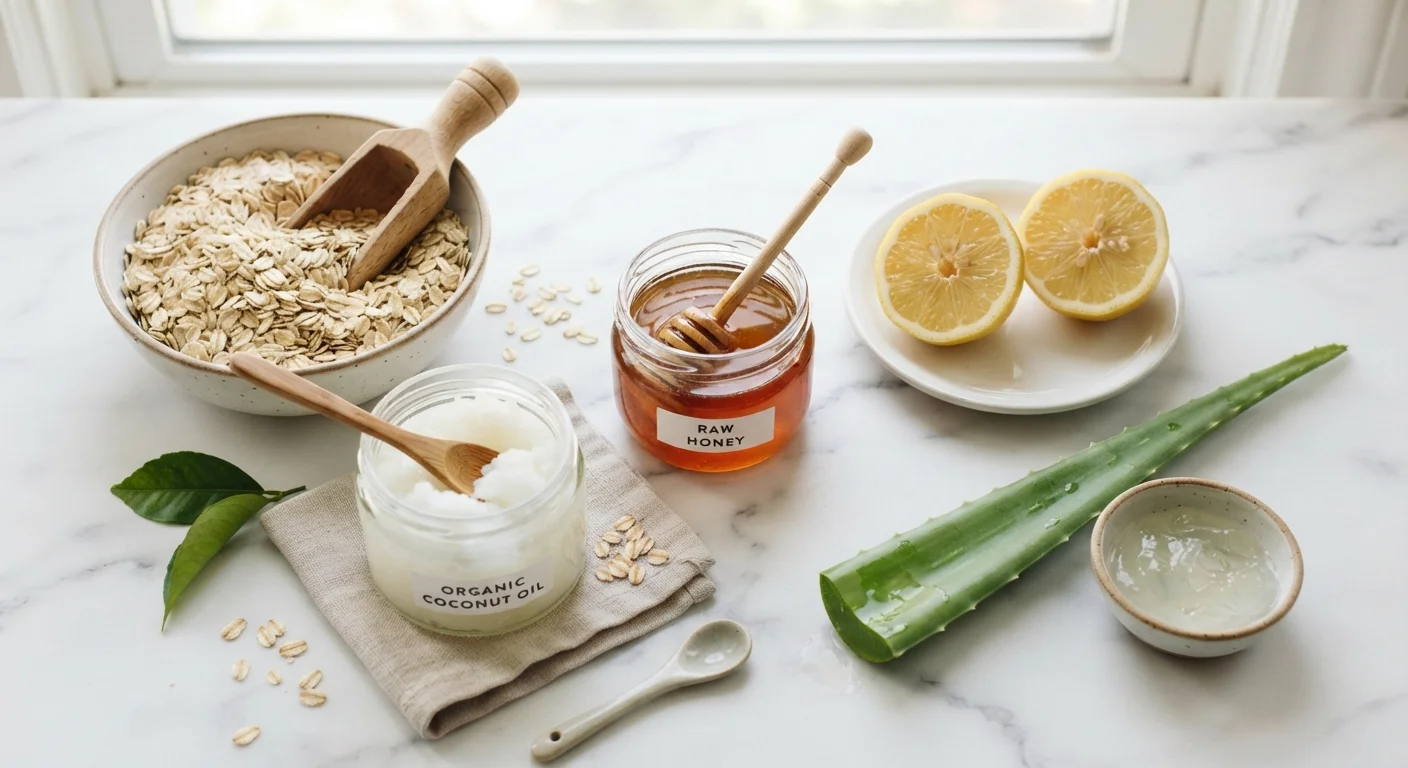
Photo: usewiseguide.com editorial
Key Takeaways
- Colloidal oatmeal has solid clinical support for calming irritated or dry skin.
- Coconut oil can moisturize some skin types but may worsen acne for others.
- Lemon juice is acidic enough to irritate skin and cause photosensitivity reactions.
- Apple cider vinegar lacks clinical evidence for most skin and scalp claims.
- Natural does not mean risk-free; some kitchen ingredients cause genuine skin damage.
Why pantry beauty is so appealing
Household ingredients cost a fraction of what specialty beauty products do, and many families already have them on hand. That combination makes kitchen-cabinet beauty treatments genuinely attractive for budget-minded households. The problem is that popularity and evidence are not the same thing. Some ingredients have real research behind them; others rely almost entirely on anecdote and social media repetition.
This article goes through the most common kitchen ingredients people apply to skin and hair, states what the research and dermatology community actually say, and flags the ones that carry real risk of harm. For a broader look at building an affordable routine with proven products, see how to build a morning skincare routine on a budget.
Myth
Coconut oil is a safe, effective moisturizer for all skin types.
Fact
Coconut oil can moisturize dry skin but is comedogenic (pore-blocking) and can worsen acne, particularly on the face.
Coconut oil scores high on the comedogenic scale, meaning it is more likely than many oils to clog pores. Research published in dermatology literature confirms it can function as an emollient for very dry conditions such as atopic dermatitis, particularly on the body. However, applying it to the face, especially on skin that is already acne-prone, carries a real risk of breakouts. It works better for some purposes (dry cuticles, hair ends) than others (facial moisturizer for oily or combination skin).
Myth
Lemon juice brightens skin and fades dark spots safely.
Fact
Lemon juice is acidic enough to disrupt skin barrier function and can cause phytophotodermatitis, a chemical burn triggered by sun exposure.
The idea that vitamin C in lemon juice will lighten hyperpigmentation the same way a formulated vitamin C serum does is a significant oversimplification. The pH of undiluted lemon juice (around 2) is far more acidic than the skin's natural pH (around 4.5 to 5.5). Direct application can cause irritation, peeling, and in combination with sunlight, phytophotodermatitis: a reaction producing blistering and long-lasting dark patches. Stabilized vitamin C in cosmetic formulations is a different compound (often ascorbic acid at a controlled concentration) and is not interchangeable with squeezing a lemon on your face.
Myth
Apple cider vinegar balances skin pH and clears acne when applied topically.
Fact
There is no published clinical evidence supporting topical apple cider vinegar for acne or pH balancing on intact skin.
Healthy intact skin regulates its own pH through sebum, sweat, and the skin microbiome. Adding an acidic liquid does not meaningfully or durably change this balance. Apple cider vinegar contains acetic acid, which has some antimicrobial properties in lab settings, but those conditions do not translate directly to skin application. Reported burns and irritation from undiluted use are well documented in dermatology case reports. The claims about acne clearance come from testimonials, not controlled trials.
Myth
Baking soda is a gentle, natural exfoliant for the face.
Fact
Baking soda has a pH of around 9, which is strongly alkaline and disruptive to the skin barrier.
Skin needs a mildly acidic environment to support its protective barrier and microbiome. Baking soda's high alkalinity strips this barrier, which can lead to dryness, irritation, and increased sensitivity over time. Despite its popularity in DIY beauty posts, dermatologists consistently advise against using it as a facial scrub or mask ingredient. The texture may feel exfoliating in the moment, but the pH disruption outweighs that benefit.
Myth
Raw egg white tightens pores and firms skin.
Fact
Any tightening sensation from drying egg white is temporary and superficial; there is no evidence it changes pore size.
Pore size is largely determined by genetics and sebum production; no topical ingredient permanently shrinks pores. Egg white dries to a film that can feel temporarily tight, but this sensation disappears once the skin is rinsed. Beyond the lack of benefit, raw egg white carries a small risk of Salmonella contamination and potential allergic reaction for people with egg sensitivities. The tightening effect people notice is cosmetic and short-lived.
Myth
Oatmeal is just a folk remedy with no real science behind it.
Fact
Colloidal oatmeal is recognized by the FDA as a skin protectant and has published clinical evidence supporting its use for dry and sensitive skin.
Unlike many kitchen ingredients used in beauty contexts, oatmeal has a documented evidence base. The FDA approved colloidal oatmeal as an over-the-counter skin protectant ingredient. Clinical studies have shown it reduces itch, inflammation markers, and water loss in people with dry or eczema-prone skin. This does not mean any oat product works identically, but it does place oatmeal in a different category from ingredients that rely purely on anecdote.
Ingredients worth knowing about
A few kitchen staples have enough published evidence to be worth discussing in more detail beyond the myth-fact format.
Oatmeal
Colloidal oatmeal (finely milled oats suspended in water or cream) is one of the few DIY-adjacent ingredients with regulatory recognition. The U.S. Food and Drug Administration classifies it as a skin protectant when formulated correctly. Published studies support its ability to reduce itch and transepidermal water loss in people with eczema and dry skin. Grinding whole oats at home produces a coarser product than pharmaceutical-grade colloidal oatmeal, so results may differ, but a simple oat bath is considered low-risk for most people.
Honey
Raw honey has documented antimicrobial properties, largely from hydrogen peroxide it produces and, in some varieties like manuka, from methylglyoxal. Small clinical studies have examined medical-grade honey for wound care, but over-the-counter raw honey from a grocery store is not standardized the same way. Using it as an occasional moisturizing mask is generally low-risk for people without bee-product allergies, though the evidence for significant skin benefit is limited compared to a basic drugstore moisturizer.
If you are curious about where DIY masks fit into a broader routine, this overview of DIY face masks covers the general guidance dermatologists offer.
Some kitchen ingredients can cause lasting skin damage
What to consider before applying any food to skin
Skin pH, concentration, and individual sensitivity all change how an ingredient behaves. A substance that causes no reaction in one person can cause contact dermatitis in another. Patch testing on a small area before full application is a basic precaution that costs nothing.
People with eczema, rosacea, or any chronic skin condition should speak with a dermatologist before experimenting with food-based treatments. The same applies to anyone who is pregnant, as some traditionally used ingredients have not been studied in that context. This article is general information and not medical advice; a qualified healthcare provider is the right person to consult about any specific skin concern.
For context on how ingredient choices connect to broader wellness decisions, the evidence on organic versus conventional produce is a useful companion read. And if you are trying to cut overall beauty spending without relying on DIY, haircare habits that save money over time outlines simple behavior changes that add up.
The content provided on our blog site traverses numerous categories, offering readers valuable and practical information. Readers can use the editorial team’s research and data to gain more insights into their topics of interest. However, they are requested not to treat the articles as conclusive. The website team cannot be held responsible for differences in data or inaccuracies found across other platforms. Please also note that the site might also miss out on various schemes and offers available that the readers may find more beneficial than the ones we cover.