
Organic vs. Conventional Produce: What the Evidence Actually Shows

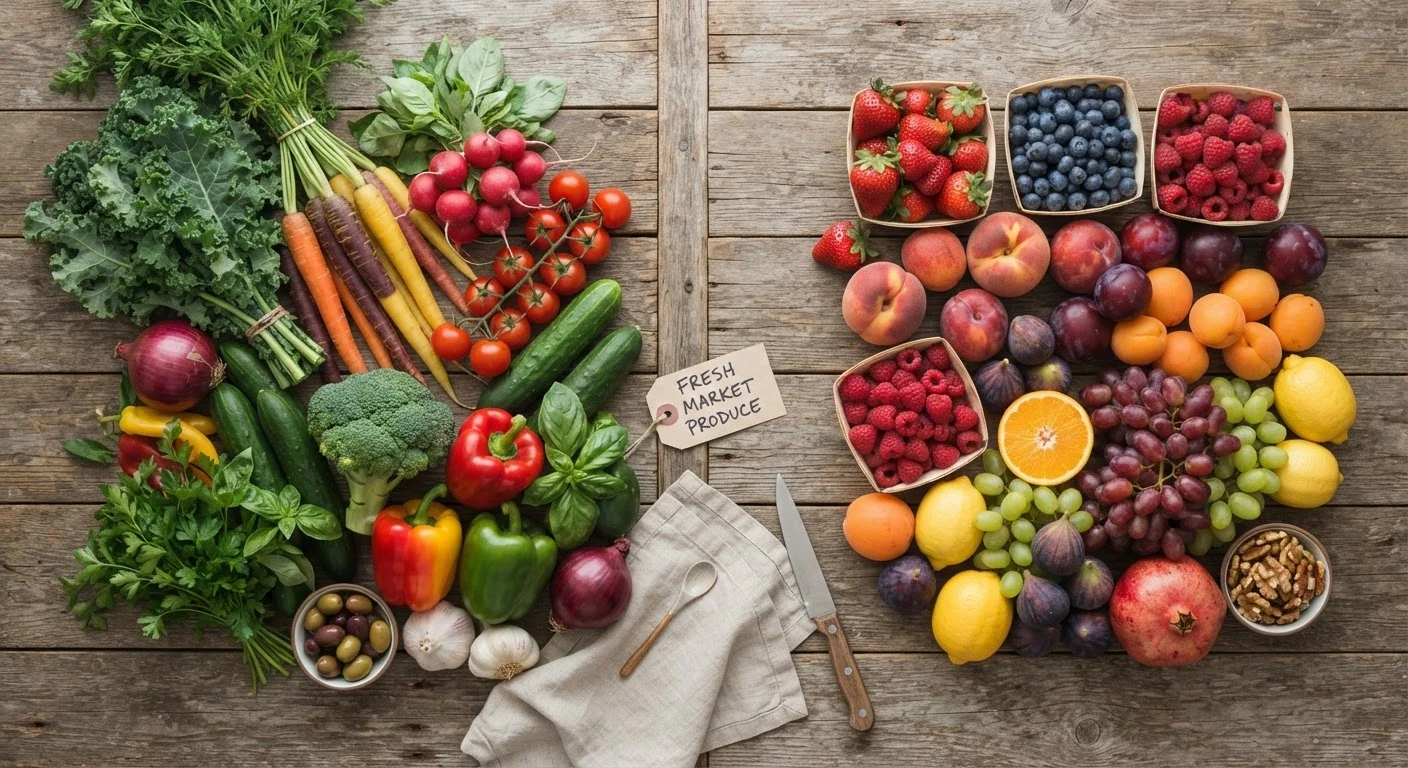
Photo: usewiseguide.com editorial
Key Takeaways
- Nutritional differences between organic and conventional produce are generally small and inconsistent across studies.
- Pesticide residues on conventional produce are typically low, but certain crops consistently show higher levels.
- The Environmental Working Group's Dirty Dozen list can help families prioritize where to spend on organic.
- Buying seasonal and local conventional produce often delivers fresher, more nutritious food at lower cost.
- For most families, a mixed approach based on specific crops and budget makes more practical sense than an all-or-nothing switch.
What the nutrition research actually shows
The most frequently cited large-scale review on this question, a 2012 meta-analysis published in the Annals of Internal Medicine by Stanford researchers, found no strong evidence that organic produce delivers meaningfully better nutrition than conventional. A 2014 meta-analysis in the British Journal of Nutrition reached a different conclusion, finding higher concentrations of certain polyphenols and antioxidants in organic crops. Both reviews looked at hundreds of studies. The disagreement between them reflects genuine complexity in the data: soil type, crop variety, growing season, and time since harvest all affect nutrient levels, sometimes more than farming method does.
What this means practically is that switching entirely to organic produce will not guarantee a nutritional upgrade. Eating a wider variety of fruits and vegetables, regardless of how they were grown, has a larger and more consistent impact on diet quality than the organic label alone.
Building meals around seasonal produce is one way to get fresher, more nutrient-dense food without automatically paying organic prices.
Pesticide residues: what the data shows
The U.S. Department of Agriculture's Pesticide Data Program tests thousands of produce samples each year. The program consistently finds that most conventional produce carries residues well below the tolerances set by the Environmental Protection Agency. Multiple residues on a single item are common, but the presence of a residue is not the same as a health risk. Regulatory tolerances are set with safety margins, though critics note those margins may not account for cumulative exposure from eating many different foods over time.
Organic produce is not pesticide-free. Certain pesticides derived from natural sources are approved for organic farming. Residue levels on organic produce are generally lower, but the gap varies considerably by crop.
| Organic produce | Conventional produce | |
|---|---|---|
| Average cost premium | 20-100% higher than conventional | Baseline price |
| Pesticide residue levels | Generally lower, not zero | Typically within EPA tolerances |
| Nutritional differences | Slightly higher in some antioxidants per some studies | Comparable in most nutrients |
| Availability | Expanding but not universal | Widely available in all stores |
| Frozen options | Available, often lower cost than fresh organic | Widely available at low cost |
| Best use case | High-residue crops, young children's staples | Low-residue crops, high-volume staples |
For families concerned about exposure, the Environmental Working Group publishes an annual list of the crops with the highest and lowest detected residue levels. Strawberries, spinach, kale, peaches, and apples have consistently appeared near the top of that list in recent years. Avocados, sweet corn, pineapples, and onions tend to show very low residues. Using this kind of crop-specific information lets families direct their organic spending where the difference is largest.
The real cost gap and how to manage it
Organic produce typically costs 20 to 100 percent more than conventional equivalents at mainstream grocery stores, with the gap varying by crop, region, and season. For a family buying several pounds of produce each week, an all-organic approach can add meaningfully to the grocery bill over a month.
A targeted strategy addresses this directly. Buying organic only for the crops that appear on high-residue lists, and buying conventional for everything else, reduces cost while still limiting exposure where the data suggests it matters most. Frozen organic vegetables are often priced closer to fresh conventional options and retain most of their nutritional value.
Make your organic budget go further
The same logic that applies to produce applies elsewhere in consumer decisions. The article on when new versus used purchases make sense makes a similar point: the question is never simply which option costs less, but which delivers the most value for a specific use case.
Special considerations for children and vulnerable family members
Children eat more food relative to their body weight than adults do, and their developing systems process certain compounds differently. For this reason, some pediatric nutrition researchers consider it reasonable to prioritize lower-residue produce for young children when the budget allows, particularly for crops that appear frequently on high-residue lists.
Pregnant individuals and people with specific health conditions may also want to discuss produce choices with a healthcare provider, since individual circumstances can affect what tradeoffs make sense. This article is general information only, not medical or dietary advice for any individual.
Always consult a qualified healthcare professional for guidance specific to your health needs or those of your children.
A practical framework for grocery decisions
The organic vs. conventional decision does not need to be all-or-nothing. A workable approach for most families involves three steps. First, identify which produce items the household eats most often and in largest quantities. Second, check whether those items appear on high-residue crop lists, and buy organic versions of those specific items. Third, buy conventional for everything else, and put any savings toward buying more variety overall.
Washing all produce thoroughly under running water removes some surface residues and is worth doing regardless of growing method. Peeling when appropriate also reduces exposure, though it removes some fiber and nutrients along with the skin.
20-100%
Typical organic price premium over conventional
The USDA Economic Research Service has documented consistent price gaps across organic and conventional produce categories at retail.
99%+
USDA-tested samples below EPA pesticide tolerances
The USDA Pesticide Data Program annually reports that the vast majority of conventional produce samples fall within established regulatory limits.
~50%
Higher antioxidant levels in some organic crops
A 2014 meta-analysis in the British Journal of Nutrition found organic crops had higher concentrations of certain antioxidants in a subset of studies reviewed.
Seasonal buying compounds these benefits. Produce harvested at peak ripeness and sold close to where it was grown tends to have higher nutrient levels than out-of-season produce shipped long distances, whether organic or conventional.
The content provided on our blog site traverses numerous categories, offering readers valuable and practical information. Readers can use the editorial team’s research and data to gain more insights into their topics of interest. However, they are requested not to treat the articles as conclusive. The website team cannot be held responsible for differences in data or inaccuracies found across other platforms. Please also note that the site might also miss out on various schemes and offers available that the readers may find more beneficial than the ones we cover.