
Dried Beans vs. Canned Beans: What Families Should Know

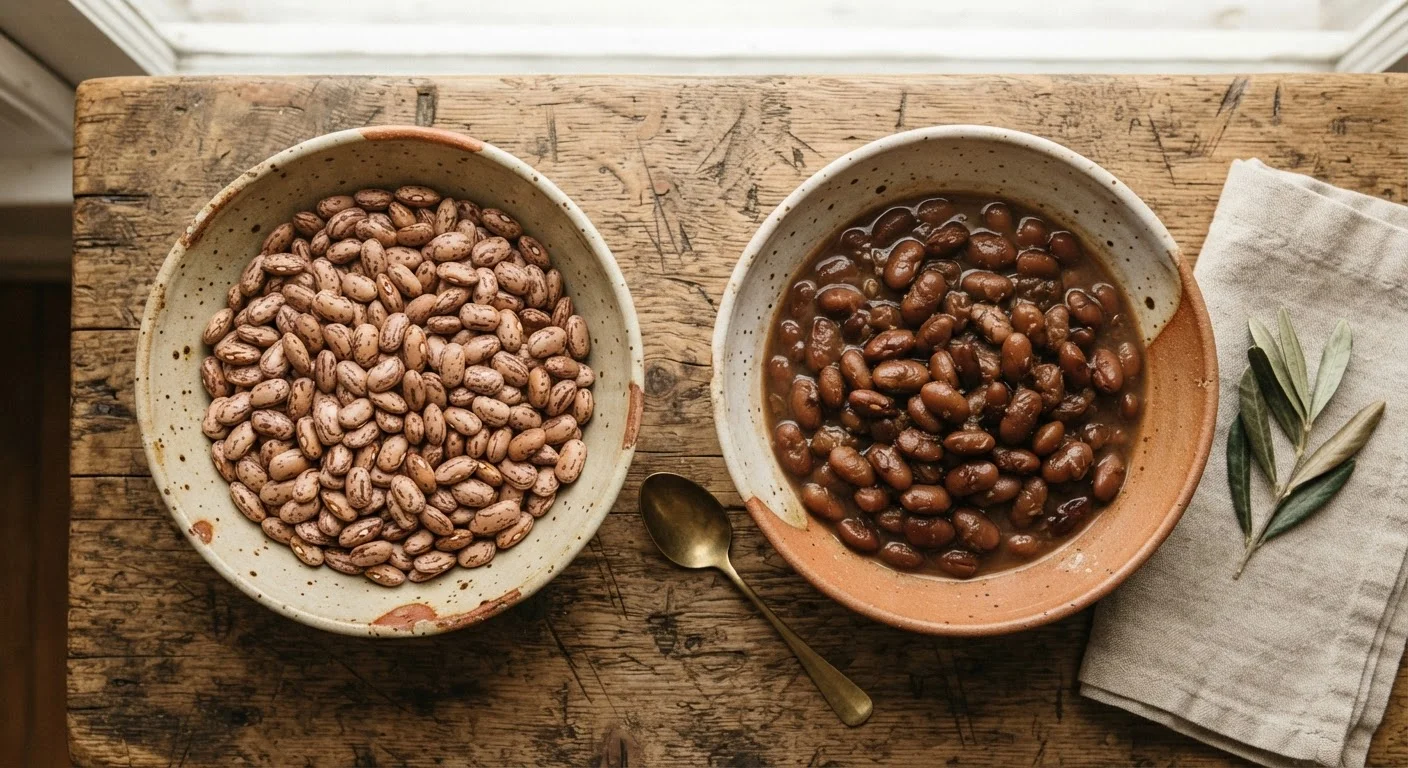
Photo: usewiseguide.com editorial
Key Takeaways
- Dried beans cost significantly less per serving than canned beans across most varieties.
- Canned beans contain added sodium in most cases; rinsing removes roughly 40 percent of it.
- Nutritional differences between dried and canned beans are small when canned beans are rinsed.
- Dried beans require soaking and long cook times, which limits their use on busy weeknights.
- Both forms supply protein, fiber, and essential minerals that support a healthy diet.
- Keeping both types on hand gives families flexibility without sacrificing nutrition or budget.
Cost: where the gap is largest
On a per-serving basis, dried beans are consistently less expensive than canned. A 1-pound bag of dried black beans or pinto beans typically yields about 12 half-cup servings of cooked beans. A can of beans provides roughly 3.5 servings. When you price both at an average grocery store, dried beans usually cost somewhere between 4 and 7 times less per serving, depending on the variety and store.
That gap matters over a month of family meals. A household eating beans twice a week can save a meaningful amount annually by shifting even half of those meals to dried beans. The trade-off is time: dried beans require soaking (generally 6 to 8 hours or overnight) and then 45 minutes to 2 hours of simmering, depending on the variety.
| Criterion | Dried Beans | Canned Beans |
|---|---|---|
| Average cost per serving | ~$0.07 to $0.15 | ~$0.40 to $0.70 |
| Prep time | 6-8 hr soak + 1-2 hr cook | Under 5 minutes |
| Sodium per half-cup | 0 mg (no salt added) | 300-400 mg (standard) |
| Shelf life (unopened) | 2 to 3 years | 2 to 5 years |
| Protein per half-cup (cooked) | ~7 to 9 g | ~7 to 9 g |
| Fiber per half-cup (cooked) | ~6 to 8 g | ~5 to 7 g |
| Batch cooking suitability | Excellent | Limited |
One way to close the time gap is batch cooking. Cooking a full pound of dried beans on Sunday, then refrigerating or freezing portions, gives you the cost advantage of dried beans with something close to the convenience of canned.
Sodium: the number that matters most on canned labels
Most canned beans contain added salt as a preservative. A standard half-cup serving of canned kidney beans can contain 300 to 400 mg of sodium, which is a significant portion of the 2,300 mg daily limit general dietary guidance suggests for healthy adults. Rinsing canned beans under cold water for 30 seconds has been shown in published food science research to reduce sodium content by roughly 40 percent, so that step is worth doing consistently.
Canned beans labeled 'no salt added' or 'low sodium' are available at most grocery stores and carry much less sodium, though they are sometimes priced slightly higher than standard canned beans. Dried beans cooked at home without added salt have essentially no sodium, giving you full control over the final dish.
This article is for general informational purposes only and is not medical or dietary advice. If you have a health condition requiring sodium restriction, consult a registered dietitian or your healthcare provider for guidance specific to your situation.
Nutrition: closer than you might expect
Both dried and canned beans are nutritionally strong. They supply plant-based protein, dietary fiber, folate, iron, magnesium, and potassium. The cooking process and canning process do cause some loss of water-soluble vitamins, particularly B vitamins, but the difference between home-cooked dried beans and rinsed canned beans is small in practice.
~$0.10
Average cost per serving, dried beans
Based on typical U.S. grocery store prices for a 1-lb bag yielding roughly 12 cooked half-cup servings.
40%
Sodium reduction from rinsing canned beans
Published food science studies have measured sodium reductions of approximately 40 percent after thorough rinsing under cold running water.
6 cups
Cooked beans from one 1-lb dried bag
One pound of most dried bean varieties yields approximately 6 cups of cooked beans, equivalent to about 3.5 standard cans.
One area where dried beans have a modest edge: the liquid in canned beans (called aquafaba) absorbs some of the sodium and can also carry a small amount of BPA if the can uses a BPA-containing lining, though many manufacturers have moved to BPA-free cans. Draining and rinsing removes most of this concern.
Digestibility is similar across both forms. Some people find that well-soaked and thoroughly cooked dried beans cause less digestive discomfort than canned, though individual responses vary and no single preparation method works for everyone.
Practical use in a family kitchen
Canned beans go directly into soups, salads, tacos, and grain bowls with no prep beyond rinsing. That speed makes them reliable on nights when cooking time is short. Dried beans reward planning: a slow cooker or pressure cooker reduces active time considerably, and cooked beans store in the refrigerator for up to five days or in the freezer for about three months.
Variety selection is wider with dried beans. Grocery stores often carry heirloom varieties such as Rancho Gordo-style flageolets or Christmas lima beans in dried form that are rarely available canned. For everyday cooking, black beans, pinto beans, chickpeas, and lentils (which need no soaking) are available in both forms and suit a wide range of meals.
A practical approach for most families is to keep both on hand: canned for weeknights, dried for weekend batch cooking. That split lets you use the cheaper form when you have time and the convenient form when you do not, without compromising nutrition on either day.
The content provided on our blog site traverses numerous categories, offering readers valuable and practical information. Readers can use the editorial team’s research and data to gain more insights into their topics of interest. However, they are requested not to treat the articles as conclusive. The website team cannot be held responsible for differences in data or inaccuracies found across other platforms. Please also note that the site might also miss out on various schemes and offers available that the readers may find more beneficial than the ones we cover.