
What 'Eating the Rainbow' Actually Means for Your Family's Health

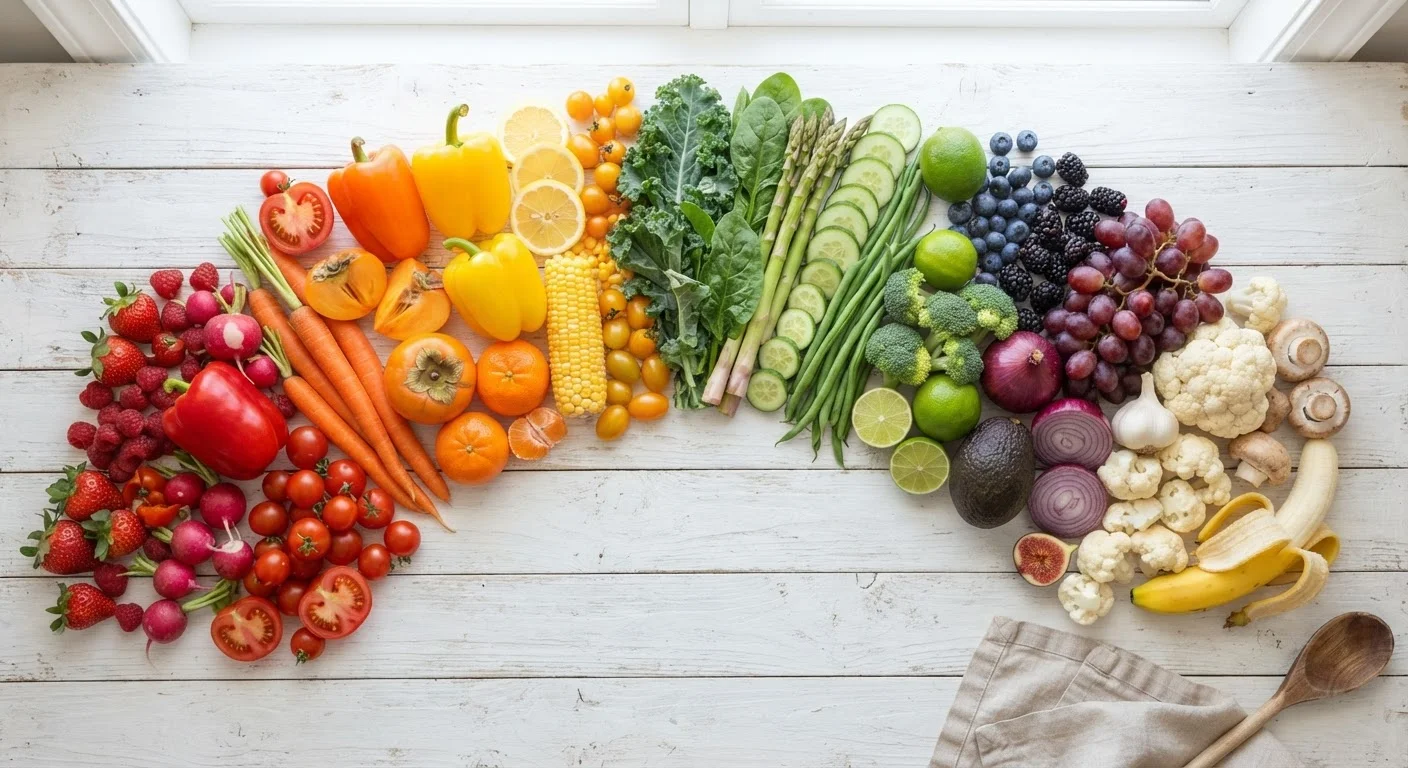
Photo: usewiseguide.com editorial
Key Takeaways
- Plant pigments are linked to distinct groups of nutrients, so color variety reflects nutritional variety.
- Frozen, canned, and dried produce count and often cost less than fresh.
- No single color group is nutritionally superior; the benefit comes from the combination.
- Children exposed to more color variety early tend to accept a wider range of vegetables as they grow.
- You do not need to hit every color every day; consistency across the week matters more.
Why color is a useful nutritional shortcut
The phrase is repeated often enough that it can start to sound like vague wellness advice. It is actually a reasonable proxy for a real nutritional principle: plant pigments are not just decorative. Many of the compounds that give fruits and vegetables their color also function as antioxidants, anti-inflammatory agents, or precursors to vitamins the body needs.
Because different pigment families cluster in different color groups, eating across those groups is a simple way to avoid nutritional gaps without tracking every micronutrient individually. It is a pattern strategy, not a prescription.
Rotate rather than overhaul
What each color group contributes
Red and pink foods such as tomatoes, watermelon, and red bell peppers contain lycopene and anthocyanins. Lycopene is a carotenoid associated with cell protection; it is more available to the body from cooked tomatoes than from raw ones.
Orange and yellow foods including carrots, sweet potatoes, and mangoes are rich in beta-carotene, which the body converts to vitamin A, and in vitamin C. These nutrients support immune function and eye health.
Green foods cover a wide range. Leafy greens like spinach and kale contain folate, iron, and lutein. Cruciferous greens like broccoli and Brussels sprouts contain glucosinolates, sulfur compounds that have been studied for their role in cellular health.
Blue and purple foods such as blueberries, eggplant, and red cabbage are high in anthocyanins, a class of flavonoids linked to cardiovascular and cognitive health in observational research.
White and tan foods are often left off the list, but onions, garlic, cauliflower, and mushrooms contain compounds including quercetin and beta-glucans that have documented biological activity.
How to apply this on a family budget
Fresh, in-season produce is one path, but it is not the only one. Frozen vegetables retain their nutrients well because they are typically processed close to harvest. Canned tomatoes, canned beans, and dried lentils add color-group coverage at a fraction of the cost of fresh equivalents.
Buying what is in season or on markdown is a consistent way to rotate colors without overspending. A bag of frozen mixed vegetables covers three or four color groups at once. Dried fruit such as raisins or prunes adds purple-group phytonutrients to oatmeal or trail mix with no prep required.
Batch cooking helps as well. Roasting a sheet pan of whatever vegetables are on hand, across two or three colors, gives the family several meals' worth of variety without the effort of daily preparation.
A parent adds a handful of frozen spinach to a pasta sauce and includes sliced red bell pepper and shredded carrots as sides.
A family makes a weekend smoothie with frozen blueberries, a banana, and a handful of fresh kale.
A weeknight dinner features a sheet pan of roasted sweet potatoes, broccoli florets, and red onion.
Getting children on board
Children are more likely to try new foods when they are involved in choosing or preparing them. Framing a meal as a color game, asking a child to pick one vegetable from each color group at the store, makes variety feel like participation rather than compliance.
Repeated, low-pressure exposure matters more than any single meal. A child who refuses red bell pepper this week may accept it in three months if it continues to appear on the plate without pressure attached. Research in pediatric nutrition consistently supports this kind of repeated neutral exposure.
Small changes add up. Swapping white rice for a mix that includes purple cabbage, or adding shredded carrots to ground meat dishes, adds color-group coverage without a complete meal overhaul.
This article is for general informational purposes only and is not a substitute for advice from a registered dietitian or other qualified healthcare professional. Consult a healthcare provider before making significant changes to your family's diet, particularly for children, pregnant individuals, or anyone managing a health condition.
Frequently Asked Questions
The content provided on our blog site traverses numerous categories, offering readers valuable and practical information. Readers can use the editorial team’s research and data to gain more insights into their topics of interest. However, they are requested not to treat the articles as conclusive. The website team cannot be held responsible for differences in data or inaccuracies found across other platforms. Please also note that the site might also miss out on various schemes and offers available that the readers may find more beneficial than the ones we cover.