
Free and Low-Cost Ways Families Spend Time Together Without Overspending on Entertainment

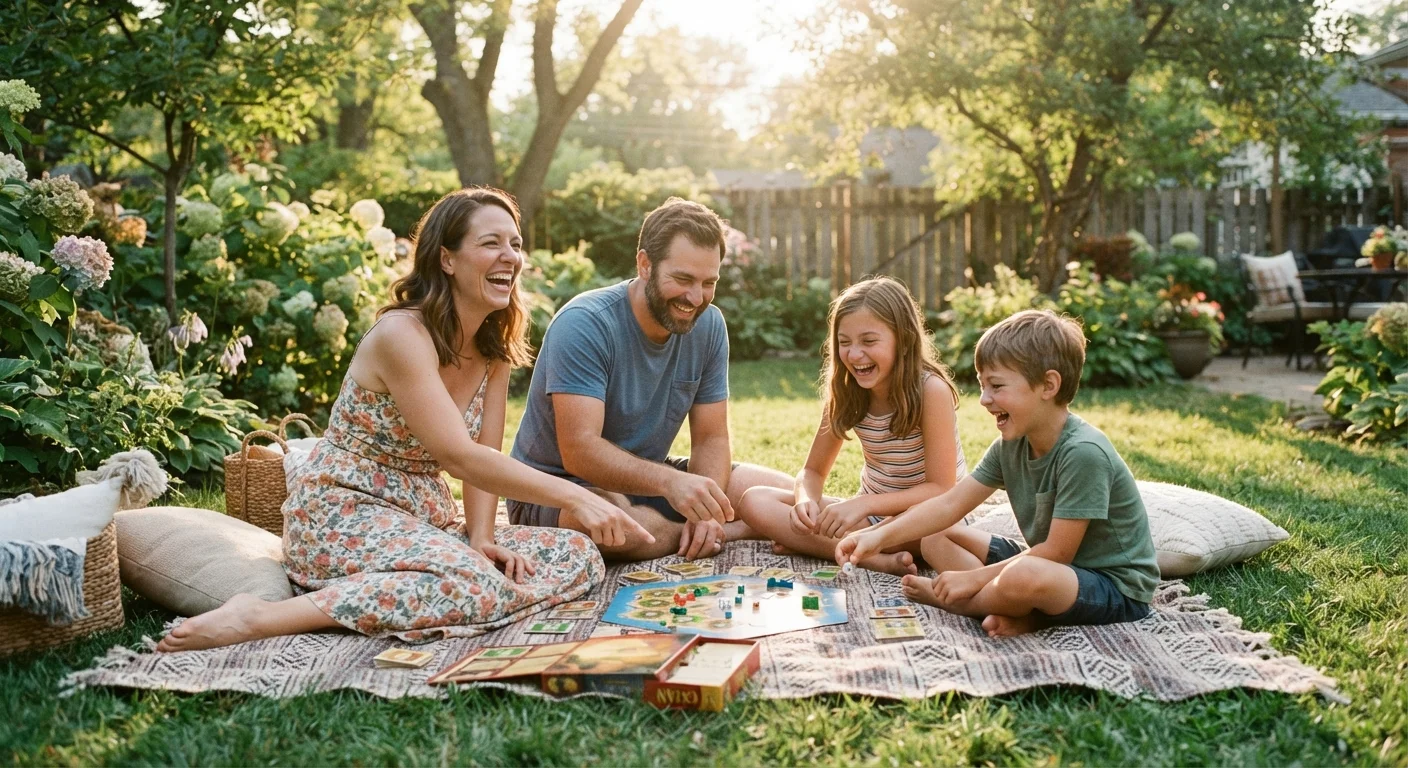
Photo: usewiseguide.com editorial
Key Takeaways
- Public libraries offer far more than books, including free passes, programs, and digital resources many families overlook.
- Building low-cost routines around food, games, and outdoor time creates lasting family memories without recurring expense.
- Community calendars and parks departments regularly list free events that most local families never hear about.
- Many at-home activities, like cooking together or starting a garden, also build practical skills children carry into adulthood.
Why entertainment spending deserves a second look
Entertainment is one of the easier budget categories to trim without feeling the loss, but only if you have alternatives lined up before you cut. Families who eliminate paid activities without replacing them with something concrete tend to drift back to spending out of boredom. The goal here is not subtraction; it is substitution with things that actually work for your household.
The ideas below range from free public resources to low-cost routines that can become real family traditions. None of them require advance booking, special equipment, or a lot of planning. Fitting them into a broader approach to frugal living means choosing activities your family genuinely enjoys, not just ones that cost less.
Free does not always mean easy to find
Use your library card as a full entertainment membership
Most public library systems now offer far more than book borrowing. Many branches give cardholders access to free museum passes, state park day-use tickets, and seed libraries. Digital platforms available through library cards can include streaming audio, e-books, comics, and language-learning tools, all at no direct cost to your household.
If your children have not had a library card issued in their own names, that small step makes the resource feel personal and builds a habit of using it. Check your local system's website for a current list of partnerships, since they vary considerably by county and state.
A library card is one of the most underused free resources available to American families.
Tap into local parks and recreation calendars
City and county parks departments run free or low-cost programming year-round: nature hikes, outdoor movie nights, youth sports clinics, and seasonal festivals. These events rarely show up in social media feeds, so checking the parks department website directly or signing up for their email list is the most reliable way to stay informed.
National and state parks also offer free admission on designated days throughout the year, and the Every Kid Outdoors program provides fourth-grade students and their families with an annual pass to national parks and federal lands. That pass is free and worth investigating if your household qualifies.
Parks department programming is consistently free or low-cost and consistently overlooked.
Cook a meal together as an event, not a chore
Treating one dinner per week as a family cooking project shifts it from routine to activity. Assign roles by age: younger children can wash vegetables or measure ingredients, while older kids can handle stovetop tasks with supervision. The result is a shared experience that also produces dinner, which means it costs nothing beyond the grocery budget your family already has.
This habit pairs well with consistent meal planning, since having ingredients on hand makes spontaneous cooking nights much easier. Over time, children who cook regularly tend to develop a practical skill set that has long-term value.
A weekly cooking night costs nothing extra and builds skills children carry forward.
Rotate a short list of board games and card games
A small collection of games played repeatedly gives more value than buying new games to chase novelty. Many families already own games that go unused. Pulling them out on a consistent night each week, rather than on an impulse, normalizes the activity and makes it something children look forward to rather than something that has to be sold to them.
Thrift stores and library book sales frequently have board games in good condition at very low prices. Card games require almost no storage space and travel easily, making them practical for waiting rooms, road trips, and restaurant waits alike.
Rotating a small game collection on a regular night costs almost nothing and builds routine.
Start a low-maintenance family garden project
Growing a few vegetables or herbs does not require a large yard or a large budget. Container gardening on a balcony or windowsill works for families in apartments. Starting from seed is considerably less expensive than buying transplants, and many library seed libraries (mentioned above) provide seeds at no cost.
The activity involves children in a hands-on process that also connects to practical money conversations about where food comes from and what things cost to produce. Low-maintenance plants are a good starting point for households new to growing anything.
A container garden started from seed costs very little and gives children a tangible, ongoing project.
Build a family movie night with what you already have
Streaming subscriptions most households already pay for contain far more content than any family will watch. Rather than adding services, rotating through what is available on current subscriptions, paired with library access to DVDs or digital lending, covers a wide range. A simple ritual around movie night (chosen snacks, a rotation of who picks the film) creates the feeling of an event without added cost.
This kind of deliberate low-cost routine is part of the broader habit covered in a sustainable family savings system: it is not about deprivation, it is about spending intentionally on the things that actually matter to your household.
A consistent movie night ritual creates a real event without any added spending.
Look into museum and attraction reciprocal programs
Many science centers, children's museums, botanical gardens, and zoos participate in reciprocal membership networks. A membership purchased at one institution sometimes grants free or discounted entry at hundreds of affiliated locations nationwide. If your family visits any of these places more than once a year, the math on a membership often works in your favor compared to paying individual admission prices.
Local community foundations and some employers also distribute free passes to cultural institutions as part of their programs. It is worth asking your HR department or checking with your local community foundation whether these options exist in your area.
Reciprocal museum memberships can cover hundreds of locations for a single annual fee.
Making these habits stick
The activities above tend to work best when they become expected rather than spontaneous. A library trip on the same Saturday each month, a cooking night on Thursdays, a game rotation that everyone knows is coming: these small structures reduce friction and make it easier for children to look forward to them. Predictability is free.
Reducing entertainment spending also frees up room in the budget for other priorities. Pairing these habits with a clear picture of where your money actually goes makes the overall impact easier to see and sustain over time.
The content provided on our blog site traverses numerous categories, offering readers valuable and practical information. Readers can use the editorial team’s research and data to gain more insights into their topics of interest. However, they are requested not to treat the articles as conclusive. The website team cannot be held responsible for differences in data or inaccuracies found across other platforms. Please also note that the site might also miss out on various schemes and offers available that the readers may find more beneficial than the ones we cover.