
The Family Budget: A Plain-Language Guide to Where Your Money Actually Goes

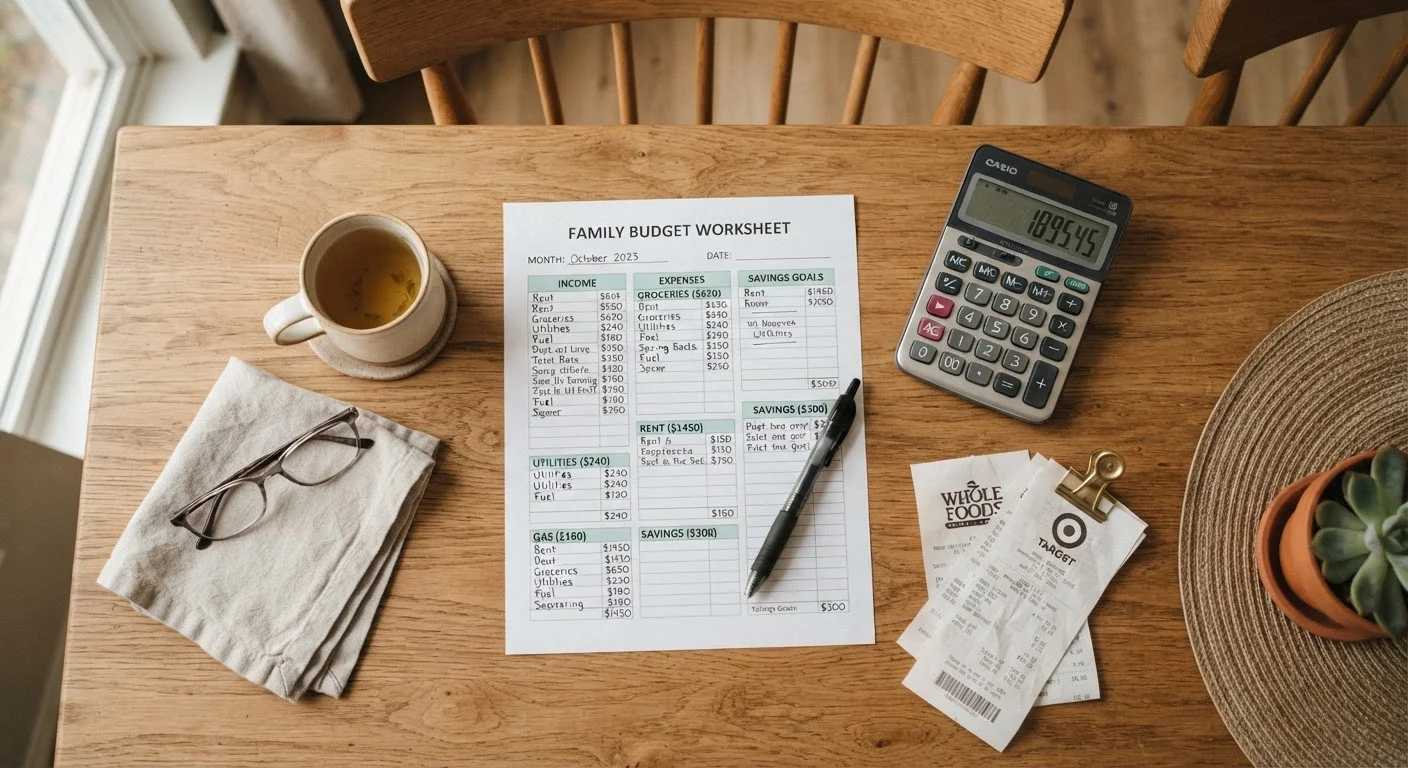
Photo: usewiseguide.com editorial
Key Takeaways
- Most families underestimate food and transportation costs by a significant margin.
- Tracking actual spending for one month reveals more than any estimate can.
- Small, consistent changes in flexible categories outperform one-time windfalls.
- A workable budget matches your real life, not an idealized version of it.
- Food spending is one of the most adjustable categories in a typical family budget.
Why most family budgets fall apart
Most family budgets fail not because the math is wrong, but because the categories are wrong. A budget built on estimates rather than real spending data almost always underestimates food, transportation, and personal care, while overestimating what is left over at month's end.
A second common problem is treating a budget as a one-time document. Prices change. Kids grow. A car needs repairs. A budget that worked in January may be useless by October if no one has updated it.
The fix is straightforward: start with what you actually spend, not what you think you should spend. Pull three months of bank and credit card statements before writing a single number. The goal in this first stage is observation, not judgment.
Fixed expense
A cost that does not change from month to month, such as a mortgage payment or car insurance premium. You owe the same amount regardless of what you do that month.
Variable expense
A cost that changes based on usage or choices, such as groceries or utility bills. These are necessary but can be adjusted by changing behavior.
Discretionary spending
Money spent on things that are wanted but not required, such as dining out, streaming subscriptions, or hobbies. This is usually the first category families look at when cutting costs.
Budget baseline
Your actual average spending in each category, calculated from real past transactions rather than estimates. It is the starting point for any realistic budget.
Irregular expense
A cost that does not appear every month but is predictable over the course of a year, such as car registration, back-to-school supplies, or an annual insurance payment.
The main spending categories and what they typically cost
Family budgets typically break into a handful of major categories. Fixed costs are expenses that stay the same each month regardless of behavior: rent or mortgage, car payments, insurance premiums, and subscription services. Variable necessary expenses change month to month but are unavoidable: groceries, utilities, fuel, and medical copays. Discretionary spending is what remains after necessities: dining out, entertainment, clothing beyond basics, and hobbies.
According to the U.S. Bureau of Labor Statistics Consumer Expenditure Survey, American households spend the largest shares of their budgets on housing (roughly 33%), transportation (roughly 16%), and food (roughly 13%). These three categories alone account for more than 60% of average household spending. Childcare and education costs add substantially for families with young children.
Food spending splits into two sub-categories worth tracking separately: groceries (food at home) and restaurant meals (food away from home). Families who track these separately often discover their dining-out spending is two to three times what they estimated. For practical strategies on the grocery side, see how consistent meal planning cuts grocery costs.
How to track what you actually spend
Tracking does not require special software. A free spreadsheet works well. The process is to list every transaction from your bank and credit card statements for the past month, assign each to a category, and total each category. This takes about an hour the first time and less each month after.
If most purchases run through one or two cards, many card issuers already categorize transactions automatically. Review their categories for accuracy, since automatic systems often misfile transactions.
Cash spending is harder to capture. A simple habit is to keep a note on your phone and log cash purchases the same day. After one month of real data, you have a baseline. After three months, you can see whether a spike in one category was a one-time event or a pattern.
When reviewing food labels and ingredient costs while planning grocery trips, understanding nutrition labels can help you compare unit costs and nutritional value at the same time.
Where small changes tend to have the biggest effect
Fixed expenses are difficult to cut without a major life change (moving, refinancing, canceling a plan). Discretionary spending is easier to trim but often small in absolute terms. The most productive category for most families is variable necessary spending, particularly food and fuel.
Food is adjustable because there are many substitution options that do not require sacrifice: buying store-brand staples, reducing food waste, or shifting the ratio of home-cooked to restaurant meals. Families who plan meals before grocery shopping consistently report lower food costs than those who shop without a list. The healthy eating hub has practical, wallet-friendly approaches to nutrition that do not require expensive specialty ingredients.
Entertainment is another area where substitution works well. Many meaningful family activities cost little or nothing. Free and low-cost family activities covers community resources and at-home traditions that replace paid entertainment without feeling like deprivation.
Check your subscriptions before adjusting groceries
For families new to systematic savings across categories, a structured approach to coupons can reduce grocery and household costs with a modest time investment.
Building a budget you will actually use
A budget that works is specific, realistic, and reviewed regularly. Set category totals based on your tracked spending, not round numbers from a generic template. If you spent $1,240 on groceries last month, budgeting $800 this month without a concrete plan for how to get there sets you up for frustration.
Build in a small buffer (many planners suggest 5% of take-home pay) for irregular expenses that are predictable in type but not in timing: car maintenance, school supplies, medical costs. Without this buffer, one unexpected bill forces you to pull from other categories and throws off the whole plan.
Schedule a monthly review of no more than 30 minutes. Compare what you planned to what you actually spent, adjust next month's targets where necessary, and note any upcoming irregular expenses. Over time, this habit produces a budget that closely matches your real life.
For families ready to move from budgeting to systematic saving, building repeatable savings habits is a logical next step.
This article is for general informational purposes only and does not constitute personalized financial advice. Consult a qualified financial professional for guidance specific to your situation.
Frequently Asked Questions
The content provided on our blog site traverses numerous categories, offering readers valuable and practical information. Readers can use the editorial team’s research and data to gain more insights into their topics of interest. However, they are requested not to treat the articles as conclusive. The website team cannot be held responsible for differences in data or inaccuracies found across other platforms. Please also note that the site might also miss out on various schemes and offers available that the readers may find more beneficial than the ones we cover.