
Meal Planning on a Tight Budget: Turning a Weekly Routine into Real Savings

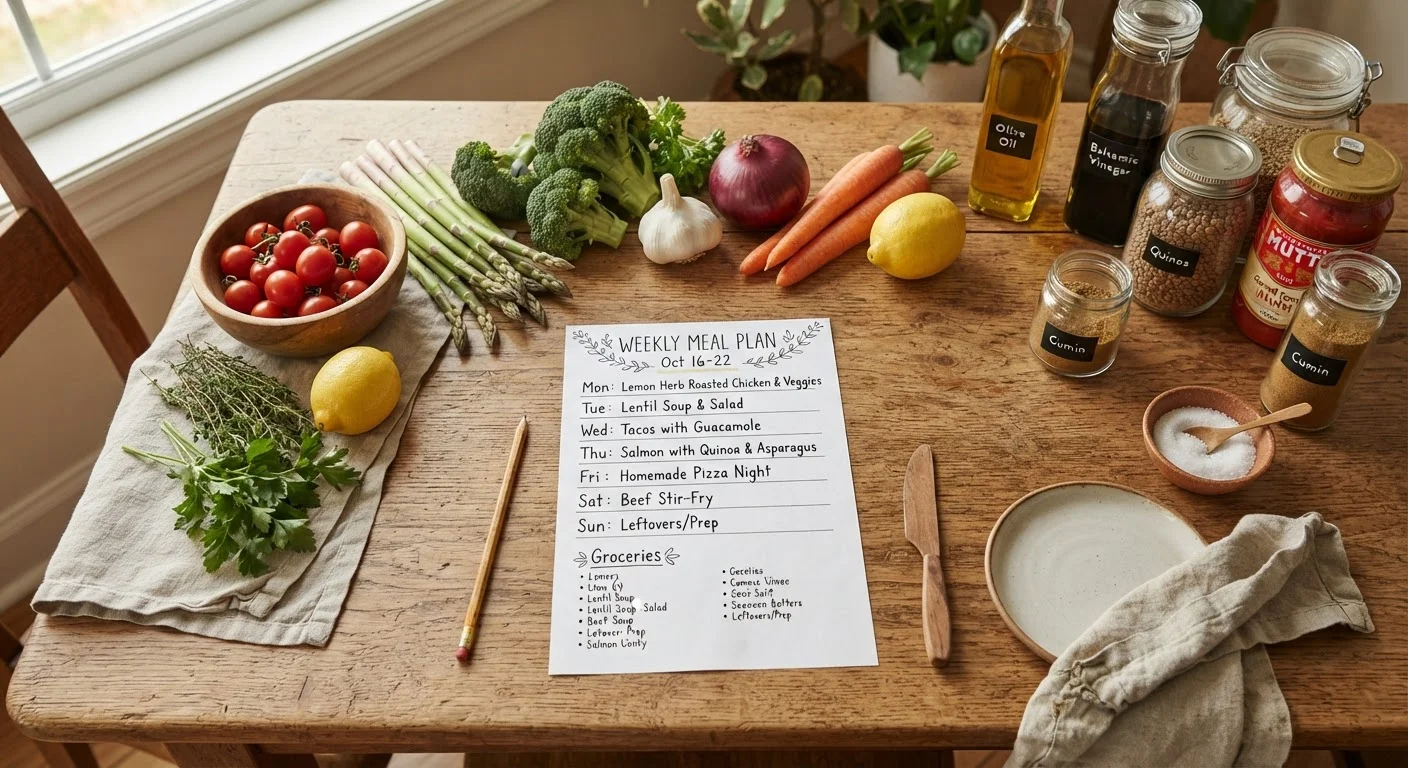
Photo: usewiseguide.com editorial
Key Takeaways
- Planning meals before shopping reduces impulse purchases and cuts grocery bills consistently.
- A written or digital meal plan takes 30 to 45 minutes weekly and pays for itself in saved food waste.
- Building meals around pantry staples and seasonal produce lowers per-serving costs significantly.
- Repurposing planned leftovers into a second meal stretches ingredients without extra spending.
- A consistent shopping list tied to your plan prevents repeat store trips, which are a major budget leak.
Why meal planning reduces spending more than most tactics
Grocery spending for most households has two primary leaks: impulse purchases made without a plan and food that spoils before it is used. Meal planning addresses both directly. A written plan narrows what goes into the cart and gives every purchased ingredient a purpose before it leaves the store.
The USDA has estimated that American households discard a substantial share of the food they buy. Even reducing that waste by a modest amount each week adds up to real savings over a year. Meal planning is one of the most practical tools for doing that, because it forces a decision about what will actually be cooked before the food is bought.
Meal planning also reduces the number of trips to the store. Each unplanned trip creates an opportunity for unbudgeted spending. Consolidating purchases into one or two planned trips per week limits that exposure.
For families working on a broader household budget, meal planning fits naturally into a larger system. The family budget guide covers how to track food spending alongside other categories so you can see where adjustments make the most impact.
What you need before you start
What you will need
The tools involved are minimal. A pen and paper work as well as any app. What matters is consistency in the practice, not the format you use.
Meal planning notepad or app
Records your weekly dinner, lunch, and breakfast plan so every household member can see what is coming.
Pantry and refrigerator inventory list
Tracks what you already own so you buy only what you actually need.
Store weekly circular or digital flyer
Shows which proteins and produce are on sale this week, letting you build meals around lower prices.
Reusable containers for portioning and storage
Stores planned leftovers safely and makes it easy to grab prepped food on busy nights.
How to build your weekly meal plan
Take a full inventory before planning anything
Open every cabinet, the refrigerator, and the freezer. Write down what you have, particularly proteins, grains, canned goods, and produce nearing the end of its useful life. Meals built around what you already own cost the least and generate the least waste.
Cross-reference this list against your pantry checklist to spot genuine gaps worth buying this week.
Decide how many meals you need and which types
Count the dinners, lunches, and breakfasts your household needs to cover this week. Factor in nights when someone eats out, school lunches already provided, or weekend meals that are less structured. Write the actual number down.
Planning only what your family will genuinely eat prevents buying ingredients that sit until they spoil. Four or five planned dinners per week is a reasonable starting point for most families.
Check what is in season and on sale
Look at your store's weekly circular before writing a single meal on the plan. Proteins and produce that are discounted this week become the anchors for your meals. Seasonal produce is typically the lowest-cost fresh option available.
For a deeper look at building meals around what is in season, see the guide to seasonal produce meal planning.
Write out your meals and assign them to specific days
Put each planned meal on a specific day rather than leaving a loose list. Assign more involved recipes to days when you have time and simpler meals to your busiest evenings. This one habit prevents the common scenario of ordering takeout because nothing is prepared and you are tired.
Plan at least one meal that will intentionally produce enough for a second use. A roast chicken on Sunday becomes chicken tacos on Tuesday. A pot of lentil soup covers two lunches. This approach stretches ingredient costs across multiple servings without extra effort.
Build your shopping list directly from the meal plan
Go through each planned meal and write down every ingredient you need that is not already in your inventory. Organize the list by store section (produce, proteins, dairy, dry goods) to move through the store faster and avoid backtracking.
Do not add items to the list that are not tied to a planned meal or a genuine household staple running low. Vague additions like "snacks" or "something for lunch" tend to expand the bill without a concrete return.
Affordable protein sources like eggs, lentils, and canned fish can anchor several meals at a fraction of the cost of fresh meat. Including at least one or two of these per week lowers the overall bill meaningfully.
Review and adjust at the end of the week
Before the next planning session, spend five minutes reviewing what worked and what did not. Which meals did the family skip? Which ingredients went unused? What ran out faster than expected?
A short weekly review sharpens the plan over time. After four or five weeks, you will have a working rotation of meals your household likes, a realistic picture of how much you consume, and a shopping list that rarely includes items that get wasted. This is the compounding payoff of the habit.
Food safety comes first with leftovers
Avoid planning more meals than you can realistically cook
Keeping costs low as the habit matures
Once the weekly routine is in place, a few additional habits lower costs further. Building meals around whole grains like brown rice, oats, and barley reduces per-serving costs because these ingredients are inexpensive, filling, and versatile across breakfast, lunch, and dinner.
Families who want to take the next step after consistent planning often move toward batch cooking, where several components are prepared at once for use across multiple days. The batch cooking starter guide walks through the basics without requiring a full weekend commitment.
Combining a meal plan with basic couponing can add another layer of savings, particularly on pantry staples and canned goods that store well. The key is to let the plan drive the couponing rather than letting available coupons drive the plan, which can lead to buying things the household does not need.
Keep a running list throughout the week
The content provided on our blog site traverses numerous categories, offering readers valuable and practical information. Readers can use the editorial team’s research and data to gain more insights into their topics of interest. However, they are requested not to treat the articles as conclusive. The website team cannot be held responsible for differences in data or inaccuracies found across other platforms. Please also note that the site might also miss out on various schemes and offers available that the readers may find more beneficial than the ones we cover.