
Whole Grains on a Budget: What to Stock and Why

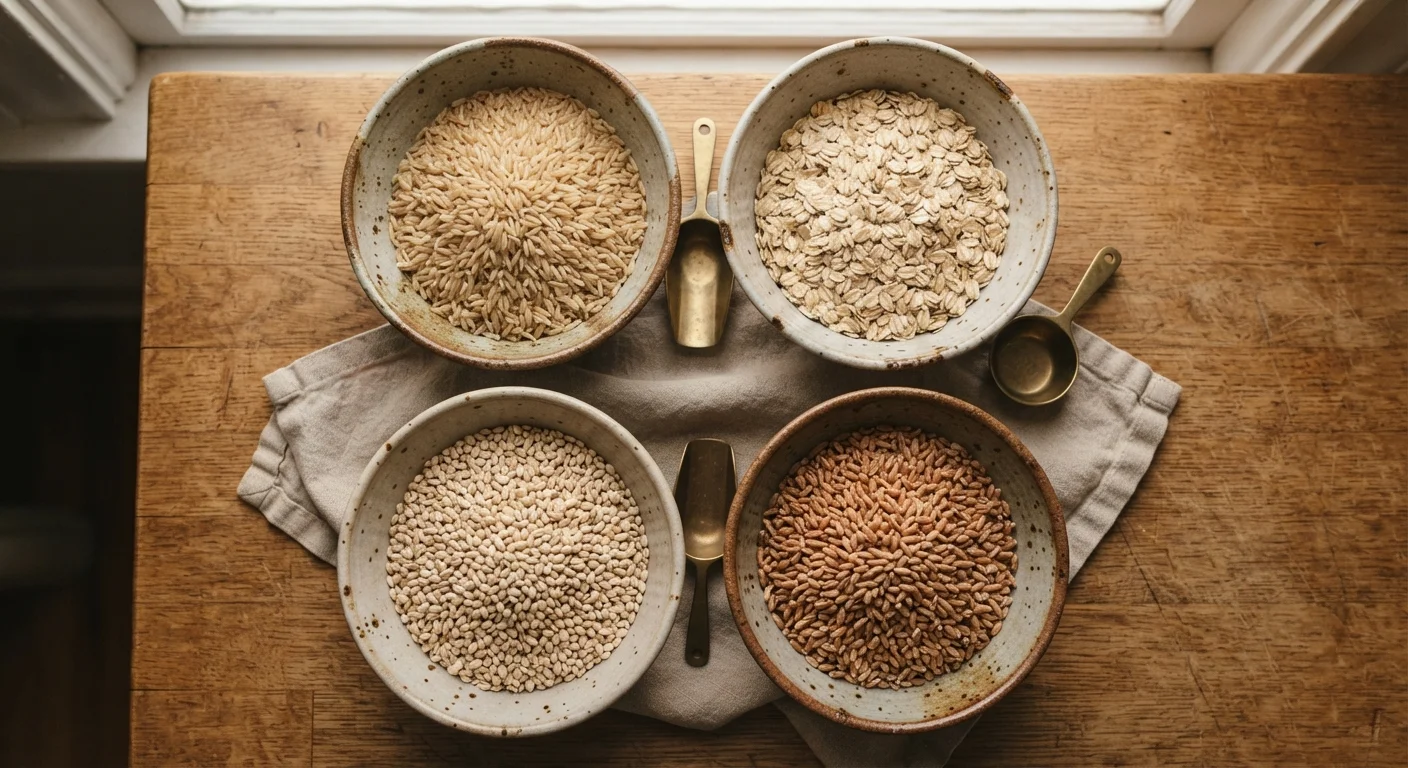
Photo: usewiseguide.com editorial
Why whole grains belong in a budget pantry
Whole grains are among the most cost-efficient foods a family can buy. Sold dry in bulk or standard bags, staples like brown rice, rolled oats, and barley often cost less per pound than their refined counterparts, and they stretch further across multiple meals. A two-pound bag of brown rice can anchor dinners, grain bowls, and soups for a full week.
The nutritional case is equally straightforward. Unlike refined grains, whole grains retain the bran and germ layers, which hold dietary fiber, B vitamins, magnesium, and iron. Dietary fiber supports digestive health and contributes to a feeling of fullness after eating, which can help families avoid reaching for snacks between meals. This is general nutrition information; always speak with a healthcare professional about your family's specific dietary needs.
For a broader look at how food spending fits into your household finances, see this plain-language family budget guide.
| Avg. cost per serving (brown rice) | Around $0.10 to $0.20 (Based on typical U.S. grocery store prices for 2 lb. bags) |
| Avg. cost per serving (rolled oats) | Around $0.10 to $0.15 (Based on standard 42 oz. canister pricing at U.S. retailers) |
| Fiber in whole wheat vs. white pasta | About 2x higher (USDA FoodData Central, cooked values per 1 cup serving) |
| Shelf life (dry whole grains, sealed) | 6 to 12 months (General food storage guidance; varies by grain and storage conditions) |
| Cook time (farro, semi-pearled) | Approx. 25 minutes |
| Grains that qualify as 100% whole grain | Brown rice, rolled oats, hulled barley, whole wheat, farro (Whole Grains Council definition: bran, germ, and endosperm intact) |
The grains worth stocking first
Brown rice is the logical starting point. It cooks without any special equipment, stores well for up to a year in an airtight container, and works in stir-fries, casseroles, burrito bowls, and soups. White rice costs similarly but is stripped of fiber and several micronutrients during processing.
Rolled oats cost very little per serving and take five minutes on the stove. Beyond breakfast porridge, they work in baked goods, savory veggie patties, and as a binder in meatloaf. Old-fashioned rolled oats and quick oats are both whole grain; instant packets often contain added sugar and less fiber.
Pearl barley is underused. It has a mild, slightly nutty flavor and a texture that thickens soups and stews naturally. Note that pearl barley is partially processed: some of the outer bran is removed, so it is not technically a whole grain. Hulled barley retains the full bran layer but takes longer to cook. Both versions provide meaningful fiber and are inexpensive.
Farro costs more than rice or oats but remains affordable when purchased in bulk. It holds up well in salads and grain bowls because it does not turn mushy, and a small portion is filling. Semi-pearled farro, the most common variety sold in U.S. stores, cooks in about 25 minutes.
Whole wheat pasta and whole grain bread are convenient entry points for households transitioning away from refined versions. The price difference at most grocery stores is small, and the fiber content is substantially higher.
Pairing grains with affordable protein makes meals more complete. Affordable protein sources like lentils and eggs work especially well alongside brown rice or farro.
Getting the most from your grain supply
Buying dry grains in larger quantities reduces the per-serving cost noticeably. Store them in sealed glass or plastic containers away from heat and moisture; most dry whole grains keep for six months to a year without quality loss.
Cooking grains in batches is the most practical way to work them into a weekly routine. A large pot of brown rice or farro cooked on Sunday can become a base for several different meals across the week without repeating the same dish. Batch cooking for families covers the planning and storage basics in more detail.
Combining grains with legumes like lentils, chickpeas, or black beans creates a more nutritionally complete meal without adding much cost. Grains provide carbohydrates and some incomplete proteins; legumes supply complementary amino acids and additional fiber. You do not need to eat them at the same meal for this benefit; a varied diet over the course of a day achieves the same effect.
For a full checklist of pantry items that support low-cost, nutritious cooking, see this stocked pantry guide. Whole grains sit at the foundation of that list alongside canned beans, cooking oils, and dried spices. If you also plan meals weekly, consistent meal planning makes it easier to rotate grains without waste.
This article is for informational purposes only and is not medical or nutritional advice. Consult a qualified healthcare professional for guidance suited to your family's individual health needs.
The content provided on our blog site traverses numerous categories, offering readers valuable and practical information. Readers can use the editorial team’s research and data to gain more insights into their topics of interest. However, they are requested not to treat the articles as conclusive. The website team cannot be held responsible for differences in data or inaccuracies found across other platforms. Please also note that the site might also miss out on various schemes and offers available that the readers may find more beneficial than the ones we cover.