
Garage Organization From Scratch: A Practical Starting Point

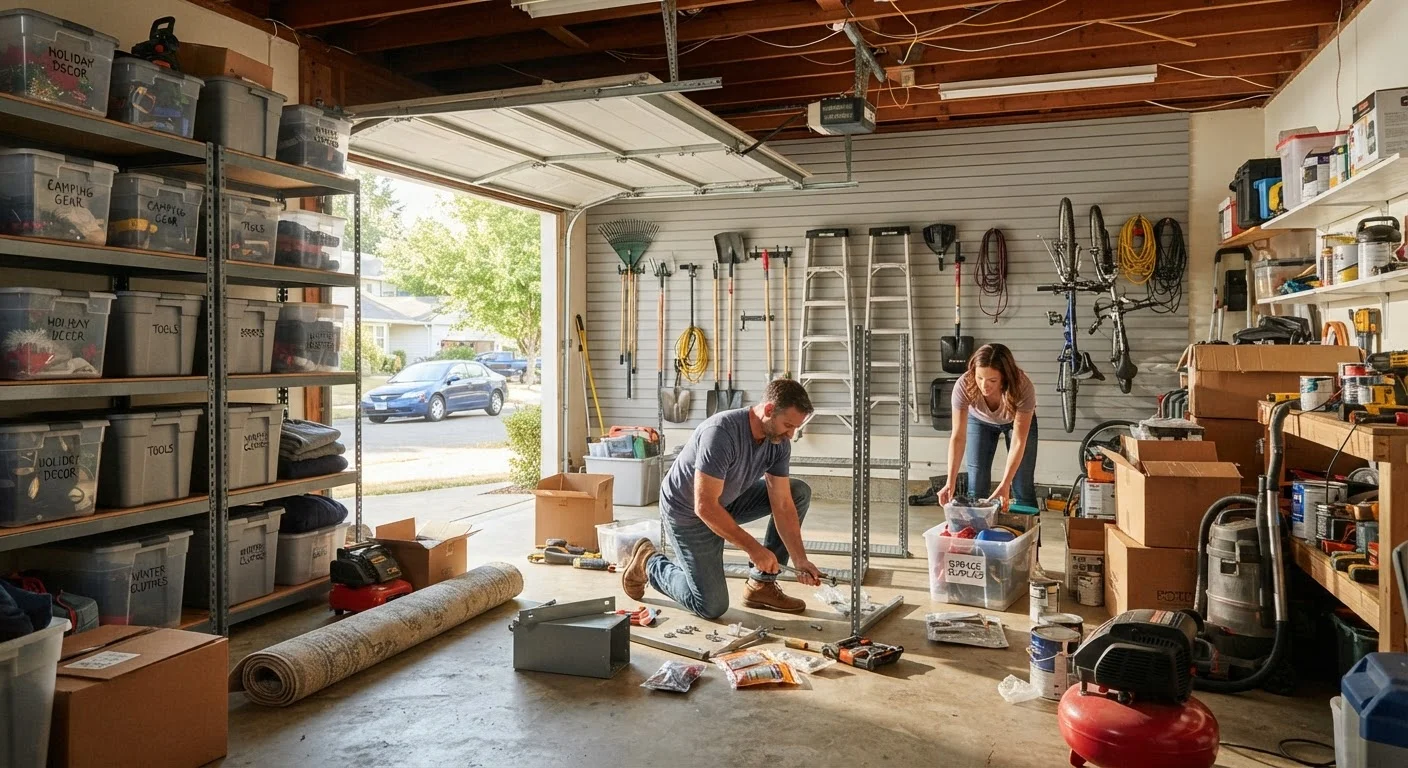
Photo: usewiseguide.com editorial
Key Takeaways
- Sort everything into categories before spending money on any storage solution.
- Wall space and ceiling space are often the most underused storage real estate in a garage.
- Dividing the garage into functional zones prevents clutter from returning.
- A 15-minute weekly reset is more effective than occasional large overhauls.
- Duplicate tools and forgotten purchases are common signs that disorganization is costing money.
Why garages get out of control
The garage is the room with no social pressure. Nobody walks in and judges it at a dinner party, so it absorbs what the rest of the house cannot. Seasonal gear, half-finished projects, tools bought for one job, sporting equipment used twice: over years, these things pile up without a system to contain them.
The practical cost is real. When you cannot see what you own, you buy duplicates. When items are not protected, they get damaged. As clutter accumulates across the home, the garage is often where the financial drain is hardest to see. A garage that fits no vehicle also affects your auto costs indirectly, since a car parked outside faces more weather exposure and wear.
None of this requires an expensive renovation to fix. It requires a method, applied in order.
Before you buy anything: the sort-first rule
The most common mistake in garage organization is purchasing shelving and bins before knowing what needs to be stored. Storage bought blind often fits poorly, gets abandoned, and adds to the clutter it was meant to solve.
Pull everything out first. Every item leaves the garage and goes onto the driveway or lawn. This step feels chaotic but it serves a purpose: you cannot categorize what you cannot see.
Sort into four groups:
- Keep and store in the garage
- Relocate to another part of the house
- Donate or sell
- Discard
Within the keep group, cluster by category: hand tools, power tools, garden supplies, automotive supplies, camping gear, sports equipment, holiday decorations. Count roughly how many items fall into each cluster. That count tells you how much storage capacity each category actually needs, which is the only reliable way to plan purchases.
Sort before you spend
Families that track duplicate purchases often find the garage holds two or three of the same item. Before discarding duplicates, check whether a neighbor, friend, or local organization could use what you no longer need.
Low-cost storage approaches that hold up
Once you know what you are storing, wall and ceiling space become your budget. Floor space in a garage is finite; vertical space usually is not fully used.
Wall-mounted pegboards are one of the most flexible options for hand tools, extension cords, and small gear. The hooks and bins are repositionable, so the layout can change as your storage needs change. Wire shelving brackets and freestanding metal shelving units hold heavier items without the cost of built-in cabinetry.
Ceiling-mounted racks work well for bulky items used infrequently: camping totes, holiday boxes, and roof-rack gear. Verify the weight rating of any ceiling mount against your actual load, and check that the installation goes into solid framing rather than drywall alone. For tasks involving ceiling joists or structural elements, a qualified contractor or handyperson can confirm the installation is safe.
Repurposed furniture, such as an old bookshelf or a kitchen cabinet, can cover a significant portion of storage needs at no additional cost. Inspect any repurposed piece for stability before loading it.
Zone
A dedicated area of the garage assigned to one category of items, so every object has a fixed home and can be returned there quickly.
Pegboard
A wall panel with evenly spaced holes that accept hooks and bins, allowing tools and small gear to hang visibly and be rearranged as needed.
Ceiling-mounted rack
A storage platform suspended from the ceiling joists, used to hold large, infrequently used items above the main floor space.
One-in-one-out rule
A habit where every new item brought into a space is matched by one item leaving, keeping total volume stable over time.
Wire shelving
Open-grid metal shelving that allows air circulation and visibility, sold in freestanding or wall-bracket styles for flexible, low-cost storage.
Labeled bins matter more than matching bins. Clear containers make it easy to identify contents without opening each one. Labels on opaque bins prevent the contents from becoming a mystery six months later.
Zones: the backbone of a working garage
A zone is a defined area of the garage dedicated to one category of items. Zones are what prevent the sorted state from collapsing back into chaos, because every item has a home and returning it takes seconds rather than decisions.
A typical family garage might include these zones: a tool area near the workbench or wall, a garden zone near the exterior door closest to the yard, an automotive zone for fluids and car care supplies, and a seasonal storage zone for items rotated in and out by time of year.
High-frequency items belong at eye level and within arm's reach. Items used once or twice a year belong on the highest shelves or in ceiling storage. This arrangement means daily use does not require moving other things out of the way, which is one of the main reasons organized garages revert to clutter.
If a vehicle is meant to fit in the garage, mark the floor with tape to show where the car sits. That boundary keeps zone edges from creeping inward over time. A well-maintained vehicle also benefits from garage protection. The guide on reducing auto ownership costs notes that consistent protection from weather and temperature extremes can reduce wear-related maintenance needs over time.
Keeping it organized after day one
The organization done on the first weekend does not hold itself. Two habits make the difference between a garage that stays functional and one that reverts within a season.
First, a 15-minute weekly reset. Pick one day and spend a short block of time returning anything that has drifted from its zone back to its place. This is far less effort than another full-day overhaul every few months.
Second, a one-in-one-out rule for tools and equipment. When a new item enters the garage, one item leaves, either to another zone, to donation, or to the discard pile. This keeps total volume stable without requiring ongoing purges.
Seasonal transitions are natural review points. When pulling out the garden supplies each spring or the holiday boxes in December, quickly check whether everything still belongs in its zone. Items that have not been touched in two or more cycles are candidates for removal.
The same discipline that holds a garage together applies across the household. Disorganization across the home has measurable financial costs, and consistent routines in one space build habits that carry into others.
Frequently Asked Questions
The content provided on our blog site traverses numerous categories, offering readers valuable and practical information. Readers can use the editorial team’s research and data to gain more insights into their topics of interest. However, they are requested not to treat the articles as conclusive. The website team cannot be held responsible for differences in data or inaccuracies found across other platforms. Please also note that the site might also miss out on various schemes and offers available that the readers may find more beneficial than the ones we cover.