
Reducing Auto Ownership Costs: A Comprehensive Guide for Everyday Drivers

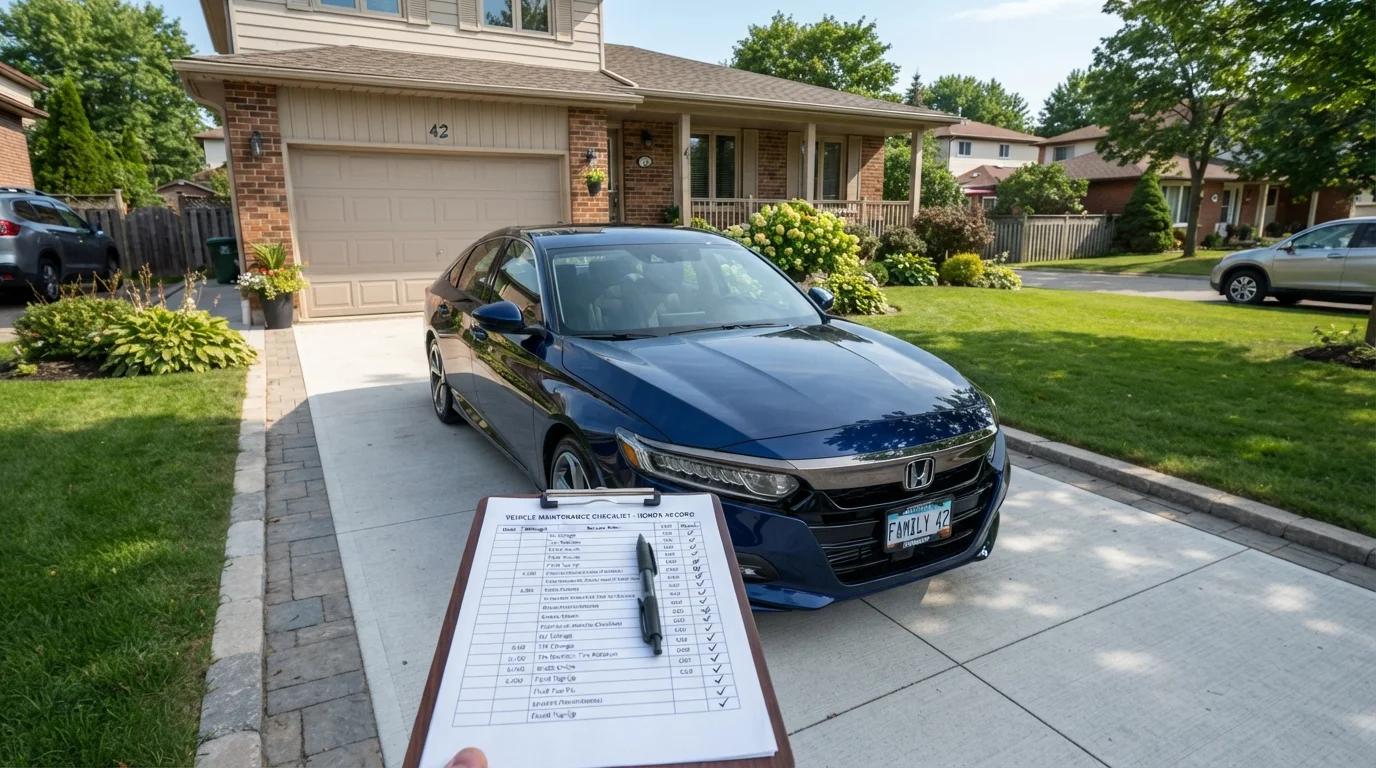
Photo: usewiseguide.com editorial
Key Takeaways
- Depreciation and financing interest together often exceed fuel and maintenance costs combined.
- Following the manufacturer's maintenance schedule prevents most expensive repairs.
- Reviewing your auto insurance annually can reveal meaningful premium reductions.
- Smoother driving habits can cut fuel consumption by a measurable percentage without any hardware changes.
- Tracking all ownership costs in one place is the first step toward reducing them.
Understanding where your car costs actually come from
Most drivers think of car costs as the monthly payment plus fuel. The actual picture is broader. AAA's vehicle cost research consistently groups ownership expenses into six categories: depreciation, financing interest, insurance, fuel, maintenance and tires, and fees and taxes. For a typical sedan driven around 15,000 miles per year, the total can run well above $9,000 annually when all categories are counted.
Depreciation alone, the drop in a vehicle's market value over time, accounts for the largest single slice of that total for new-vehicle owners. A car that loses $3,000 to $4,000 in value per year is costing you that money whether you think about it or not. Understanding this full picture is what allows you to find the categories where your specific situation has room to improve.
See the full breakdown of ownership costs for a detailed look at how each category adds up before and after purchase.
Start with one month of real tracking
Maintenance: the cost you control most directly
Skipping or delaying scheduled maintenance is the fastest way to turn small expenses into large ones. A $15 cabin air filter replacement deferred long enough can stress the HVAC blower motor, a much costlier fix. The manufacturer's maintenance schedule, found in the owner's manual, is written around the actual engineering tolerances of your vehicle, not a shop's revenue targets.
Several specific habits keep maintenance costs down:
- Check tire pressure monthly. Underinflated tires wear faster and reduce fuel economy. The correct pressure is on the driver's door jamb sticker, not the tire sidewall.
- Replace engine air filters on schedule. A clogged filter forces the engine to work harder.
- Address minor fluid leaks immediately. A slow oil leak that goes unattended can lead to low-oil engine damage far more expensive than any repair shop visit.
- Learn to read your tires. Uneven wear patterns signal alignment or suspension issues early, before those issues damage the tires themselves.
Some drivers avoid dealer service for routine items and use independent mechanics for the same work at lower labor rates. For routine services like oil changes and filter replacements, this is generally reasonable. For warranty-related or recall work, the dealership is usually the right place. Check the auto ownership myths that cost drivers real money to separate fact from habit on maintenance practices.
Fuel: habits that move the needle
Fuel is one of the few ongoing costs that responds directly to how you drive, not just what you drive. Aggressive acceleration and hard braking waste the energy already used to reach speed. Smooth inputs, anticipating traffic flow, and coasting toward red lights rather than braking at them all reduce fuel burn in measurable ways.
The U.S. Department of Energy has noted that aggressive driving can lower highway fuel economy by 15 to 30 percent compared with steady, moderate driving. That is a real number for a household running 15,000 miles per year on a vehicle that gets 28 miles per gallon.
Route planning also matters more than most drivers assume. Multiple short cold-start trips burn more fuel per mile than one longer combined trip, because a cold engine runs richer until it reaches operating temperature. Combining errands into a single outing is a practical way to reduce both fuel use and engine wear.
See fuel-saving driving techniques that actually work for a technique-by-technique breakdown.
Insurance: where most families leave money on the table
Auto insurance premiums are not fixed costs. They are recalculated at each renewal based on factors that change over time: your driving record, the vehicle's age and value, your credit profile in states that permit its use, and the coverage levels you carry. Many families set their policy once and never revisit it.
A few specific review points:
- As a vehicle ages and its market value drops, carrying comprehensive and collision coverage with a low deductible may cost more annually than the coverage would pay out in a total-loss scenario. Raising the deductible or dropping collision on an older vehicle is worth calculating.
- Bundling auto with homeowners or renters insurance often produces a meaningful discount with the same insurer.
- Low-mileage discounts exist at many carriers and apply to households that drive significantly less than the assumed 12,000 to 15,000 miles per year.
- Defensive driving course completions reduce premiums at some insurers, particularly for drivers over 55.
Shopping coverage every one to two years, comparing equivalent coverage levels across carriers, is general financial housekeeping, not just for new policyholders. This is general information; consult a licensed insurance professional for advice specific to your situation.
When comparing insurance quotes, match every coverage limit and deductible exactly across carriers. A quote with a $1,000 deductible looks cheaper than one with a $500 deductible, but you are comparing different products.
Ask your insurer whether your annual mileage on file matches your actual driving. Many policies are written at a default mileage estimate that is higher than what low-mileage households actually drive, and correcting this can reduce premiums.
Depreciation and financing: the two costs drivers underestimate
New vehicles lose a significant portion of their value in the first few years of ownership. The common industry observation is that a new car can lose 20 percent or more of its value in the first year. By the time a vehicle is three years old, a large share of that first-owner depreciation has already occurred, which is one reason a well-maintained used vehicle can represent lower total cost of ownership for a family that does not need the latest features.
Financing cost is the second underestimated line item. A $30,000 vehicle financed over 72 months at a 7 percent rate costs roughly $6,700 in interest alone over the life of the loan, before any fees. Shorter loan terms reduce total interest paid, though they increase the monthly payment. Families weighing this trade-off should model both the monthly budget impact and the total cost, not just the payment that fits this month's cash flow.
See when buying used versus new makes sense for a realistic look at how each path affects total outlay. This is general financial information; for decisions specific to your circumstances, consult a qualified financial adviser.
Hidden costs worth tracking
Parking fees, tolls, registration renewals, and inspection costs do not appear in most people's mental model of what a car costs each month, but they accumulate. A commuter paying $15 per day in parking five days a week spends $3,600 per year before touching the vehicle's mechanical costs.
Tracking these costs in one place, even a simple spreadsheet tallying every expense by category, gives you an accurate picture of what the vehicle actually costs your household. That picture is what makes it possible to compare the cost of a second vehicle against alternatives like transit passes or rideshare usage for specific trip types. See how parking, storage, and idle time quietly add up for a closer look at these categories.
For families weighing whether one vehicle or two makes more financial sense, the one-car versus two-car comparison works through the math in detail. And for a broader view of how transportation fits into household spending, the family budget guide covers where most of the money actually goes.
The content provided on our blog site traverses numerous categories, offering readers valuable and practical information. Readers can use the editorial team’s research and data to gain more insights into their topics of interest. However, they are requested not to treat the articles as conclusive. The website team cannot be held responsible for differences in data or inaccuracies found across other platforms. Please also note that the site might also miss out on various schemes and offers available that the readers may find more beneficial than the ones we cover.