
Owning One Car vs. Two: How Families Can Think Through the Math

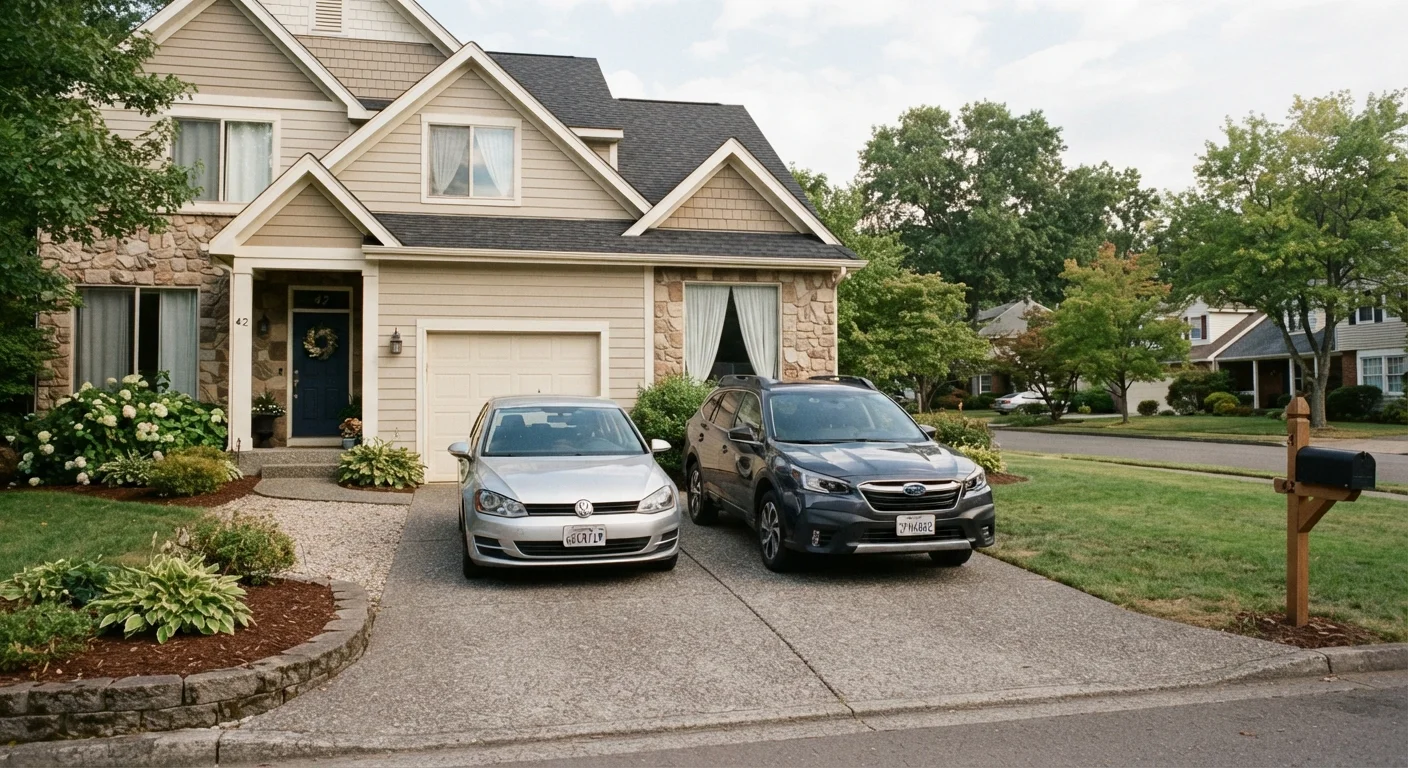
Photo: usewiseguide.com editorial
Key Takeaways
- A second vehicle typically adds $8,000 to $12,000 or more per year in total ownership costs.
- Scheduling conflicts, not commute distance, are usually the deciding factor for most families.
- Insurance, depreciation, and parking costs apply to each vehicle independently.
- Rideshare and public transit costs are worth calculating before assuming a second car is necessary.
- The right answer depends on the family's specific work schedules, geography, and cash flow.
The real cost gap between one car and two
Most families focus on the car payment when they think about a second vehicle. The payment is only part of the picture. Each additional vehicle brings its own insurance premium, registration fees, fuel costs, maintenance schedule, and depreciation curve. When those line items are added together, the total cost of a second car often runs between $8,000 and $12,000 per year, depending on the vehicle's age, type, and how much it is driven.
Depreciation alone accounts for a large share of that figure, particularly in the first few years of ownership. A vehicle that loses $3,000 to $5,000 in value annually costs that amount whether it sits in the driveway or gets driven daily. For a fuller breakdown of these categories, see the real costs of car ownership beyond the monthly payment.
Families who carry two car loans simultaneously are paying interest on both balances at once. If each loan carries a $400 monthly payment, the combined outlay is $9,600 per year before fuel, insurance, or any repair is counted.
| One-car household | Two-car household | |
|---|---|---|
| Annual vehicle fixed costs | Lower (one insurance policy, one registration) | Higher (duplicated for each vehicle) |
| Scheduling flexibility | Requires coordination | Independent travel for each adult |
| Depreciation exposure | One vehicle losing value | Two vehicles depreciating simultaneously |
| Emergency transport | Single point of failure | Backup if one vehicle is in repair |
| Best fit for geography | Urban or transit-accessible areas | Rural or suburban areas with no transit |
| Maintenance complexity | One service schedule to manage | Two service schedules and repair budgets |
When one car is genuinely workable
A single-vehicle household is practical when at least one adult works from home, works different shifts than the other, or has reliable public transit access. In those situations, the family avoids the full fixed-cost stack of a second car while still meeting most transportation needs.
The realistic test is scheduling. If one partner can drop the other at work and return home without significant detour, or if the commutes start and end at different times, coordination becomes a mild inconvenience rather than a logistical problem. Many families discover that occasional rideshare use on scheduling conflicts costs far less annually than a full second vehicle.
For families already trying to reduce what they spend on vehicles overall, strategies for reducing auto ownership costs can extend the value of a single well-maintained car rather than adding a second one.
When a second car is worth the expense
Two vehicles are harder to avoid when both adults have fixed work schedules that overlap, work in opposite directions, or include early and late shifts that make carpooling impractical. In rural and many suburban areas without bus or rail service, a second car may be the only reliable option for getting children to school, attending medical appointments, or handling emergencies.
The financial case for a second car improves when the vehicle is purchased used, kept for many years, and driven enough to spread its fixed costs over a high number of miles. A car driven 15,000 miles per year distributes its depreciation and insurance more efficiently than one that sits idle for long stretches. Idle time and storage costs quietly add to the total when a second car is used only occasionally.
Try a one-car trial before buying
Geography matters significantly. A family in a walkable urban neighborhood faces a very different calculation than one where the nearest grocery store is 10 miles away and there is no bus service.
What to actually calculate before deciding
Before committing either way, it helps to build a simple annual cost estimate for the second vehicle scenario versus an alternative. That estimate should include: insurance for the additional car, expected fuel costs based on anticipated mileage, a maintenance reserve (a common estimate is $0.08 to $0.12 per mile for routine upkeep on a used vehicle), annual depreciation, registration and taxes, and any parking or storage fees.
Then, calculate what the family would actually spend on alternatives in a one-car scenario: rideshare trips during conflicts, occasional car rentals, or transit passes. If the alternative total is substantially lower, the one-car path is worth a serious trial period. Many families find that running this comparison against actual calendar data (reviewing the prior month's schedule) produces more accurate results than estimating from memory.
For broader context on how this decision fits into overall household budgeting, the Frugal Family Living hub covers additional strategies for reducing fixed expenses without sacrificing daily function.
This article provides general financial information for educational purposes and does not constitute personalized financial advice. Consult a qualified financial professional for guidance specific to your household situation.
The content provided on our blog site traverses numerous categories, offering readers valuable and practical information. Readers can use the editorial team’s research and data to gain more insights into their topics of interest. However, they are requested not to treat the articles as conclusive. The website team cannot be held responsible for differences in data or inaccuracies found across other platforms. Please also note that the site might also miss out on various schemes and offers available that the readers may find more beneficial than the ones we cover.