
Thrift Store Finds That Actually Work in Modern Home Decor

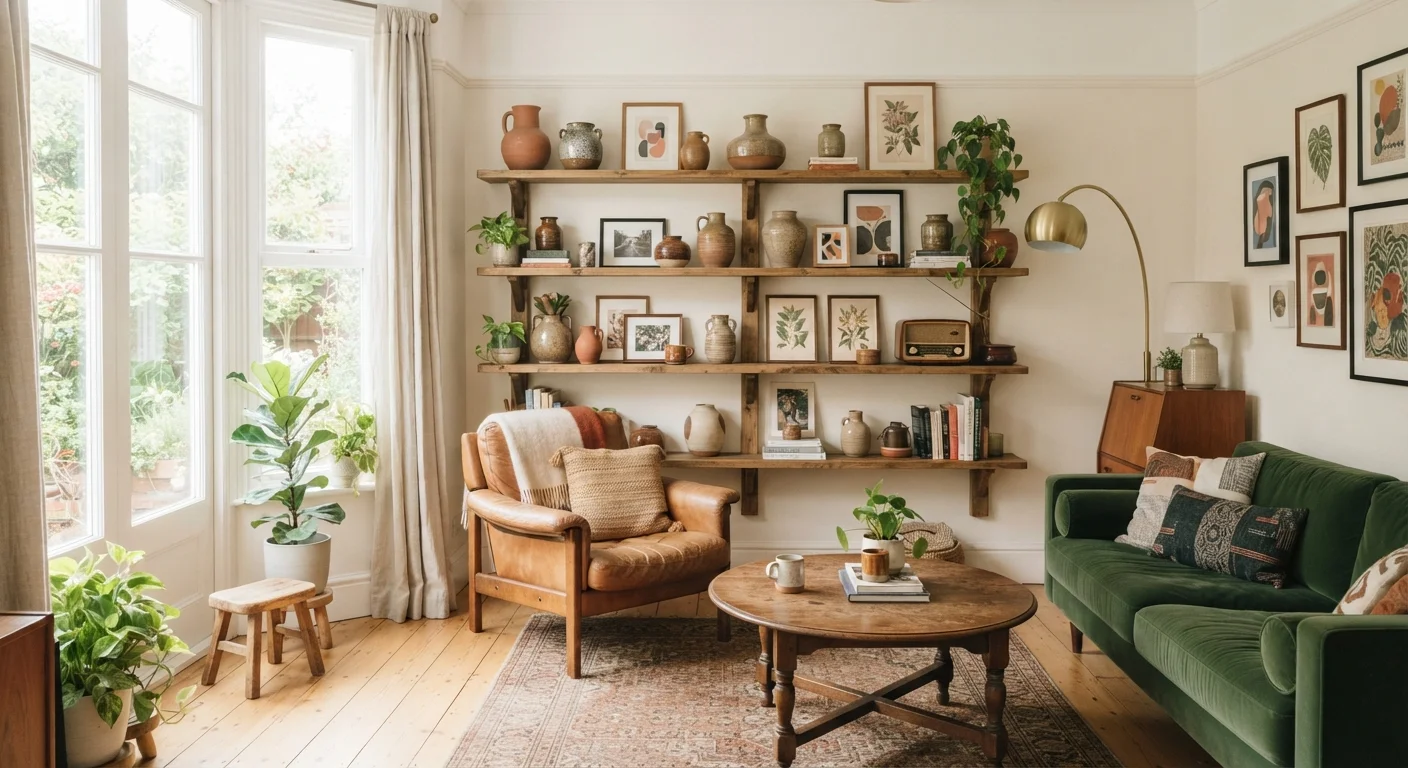
Photo: usewiseguide.com editorial
Key Takeaways
- Solid wood furniture from thrift stores often costs a fraction of new prices and refinishes well.
- Ceramic and glass pieces blend naturally into modern interiors without looking dated.
- Frames, mirrors, and textiles are high-value thrift finds that update a room quickly.
- Knowing what to skip is as useful as knowing what to buy.
- A consistent color palette ties secondhand pieces into a cohesive look.
Why secondhand works in modern interiors
Modern interior design leans toward natural materials, neutral palettes, and pieces that feel collected rather than matched. That aesthetic happens to overlap well with what thrift stores and estate sales regularly produce: solid wood, ceramic, linen, and woven goods made before particleboard and fast furniture dominated the market. The challenge is knowing what to look for and what to skip. A useful framework from Decorating on a Tight Budget: Where to Spend and Where to Save is to spend money on structural and upholstered pieces new, and let secondhand sources fill in the surfaces and accessories.
The six categories below are consistent thrift finds that translate well into current interiors without requiring significant work or specialized skills.
Build around a consistent color palette
Six thrift finds worth hunting for
Solid wood furniture with good bones
Thrift stores and estate sales regularly turn up dressers, side tables, and bookshelves built from actual wood rather than particleboard. These pieces were made to last, and with light sanding and a coat of paint or stain, they fit naturally into modern interiors. Look for dovetail joints, smooth drawer slides, and sturdy legs. Wobble and water damage are the two things worth walking away from; surface scratches are not.
A solid dresser that costs $40 secondhand performs the same function as one priced at $400 new. The difference is a weekend afternoon and a can of paint.
Surface scratches are not a reason to walk away from solid wood furniture.
Ceramic and stoneware vessels
Vintage ceramics, pitchers, and stoneware crocks sit comfortably on open shelves alongside contemporary decor. Their matte finishes and neutral tones match the earthy palette many modern interiors use. Thrift stores typically price these well below what comparable new pieces cost at home goods retailers.
Check for chips along the rim or base before buying. Minor ones on decorative pieces are fine. For anything you plan to use with food or liquid, inspect the interior glaze carefully; hairline cracks can harbor bacteria.
Vintage ceramics in neutral tones fit modern open-shelf styling with minimal effort.
Picture frames and mirrors
Frames are among the most versatile thrift finds. A heavy ornate frame painted in flat black or matte white looks deliberately modern. Mirrors in wide frames add light and visual space to small rooms, and thrift stores stock them constantly. Gallery walls built from mismatched secondhand frames have become a standard interior approach precisely because the variety looks intentional when the frames share a finish color.
For mirrors, check the backing and the glass edge. Silvering that has started to deteriorate shows as dark spots near the edge and generally cannot be reversed inexpensively.
Mismatched frames unified by a single paint color look intentional, not random.
Linen, cotton, and woven textiles
Curtain panels, tablecloths, and woven throws in natural fibers show up regularly at thrift stores and turn up well after washing. Linen curtains in particular are expensive new; a secondhand set in good condition can save $100 or more per window. Check for fading along folds where the fabric was exposed to light, and examine hems for fraying.
Textiles are one category where washing before use is non-negotiable. Most natural fiber pieces survive a cold gentle cycle without issue. If a piece comes out looking worn after washing, that condition was already there and the price should have reflected it.
Secondhand linen curtains can save $100 or more per window compared to new retail prices.
Books and objects for shelf styling
Interior designers use books as objects: stacked horizontally, grouped by color, or arranged with small sculptural pieces in between. Thrift stores sell hardcovers for $1 to $2 each. A shelf built around secondhand books, a found ceramic, and a small plant costs almost nothing and reads as intentional styling.
This is also where coordinating with a consistent palette pays off. Pulling books with spines in a similar color range, or turning them spine-in for a uniform cream look, ties a shelf together without buying anything new.
Thrift-store hardcovers grouped by spine color create shelf styling for almost nothing.
Wicker and rattan pieces
Wicker baskets, rattan trays, and woven storage are standard in modern organic and coastal interiors. The secondhand supply is large because these pieces go in and out of home goods stores in cycles. A rattan tray found for $3 functions exactly the same as one priced at $35 new. Baskets handle toy storage, blankets, and bathroom organization without requiring any modification.
Inspect wicker for broken strands along the rim or base, which fray further with use. Light fraying mid-body is cosmetic. A coat of white spray paint can refresh a yellowed piece if the structure is still sound.
A secondhand rattan tray at $3 functions identically to a $35 new one.
Making the pieces work together
The gap between a room that looks intentional and one that looks random usually comes down to restraint. Buying less and choosing deliberately matters more than volume. If a piece does not fit the palette or serve a clear function in the space, leaving it on the shelf is the right call, even at a low price. Accumulating objects you need to find a use for is one of the quieter ways home budgets expand. The article The Real Cost of Clutter: How Disorganization Quietly Drains Your Budget covers how excess objects translate into real financial costs over time.
For families working with limited storage or smaller rooms, prioritizing dual-purpose finds, baskets that store and display, shelves that hold books and objects, keeps the room functional rather than decorative for its own sake.
What to skip at the thrift store
The content provided on our blog site traverses numerous categories, offering readers valuable and practical information. Readers can use the editorial team’s research and data to gain more insights into their topics of interest. However, they are requested not to treat the articles as conclusive. The website team cannot be held responsible for differences in data or inaccuracies found across other platforms. Please also note that the site might also miss out on various schemes and offers available that the readers may find more beneficial than the ones we cover.