
Stretching Your Haircare Budget: A Practical Room-by-Room Audit

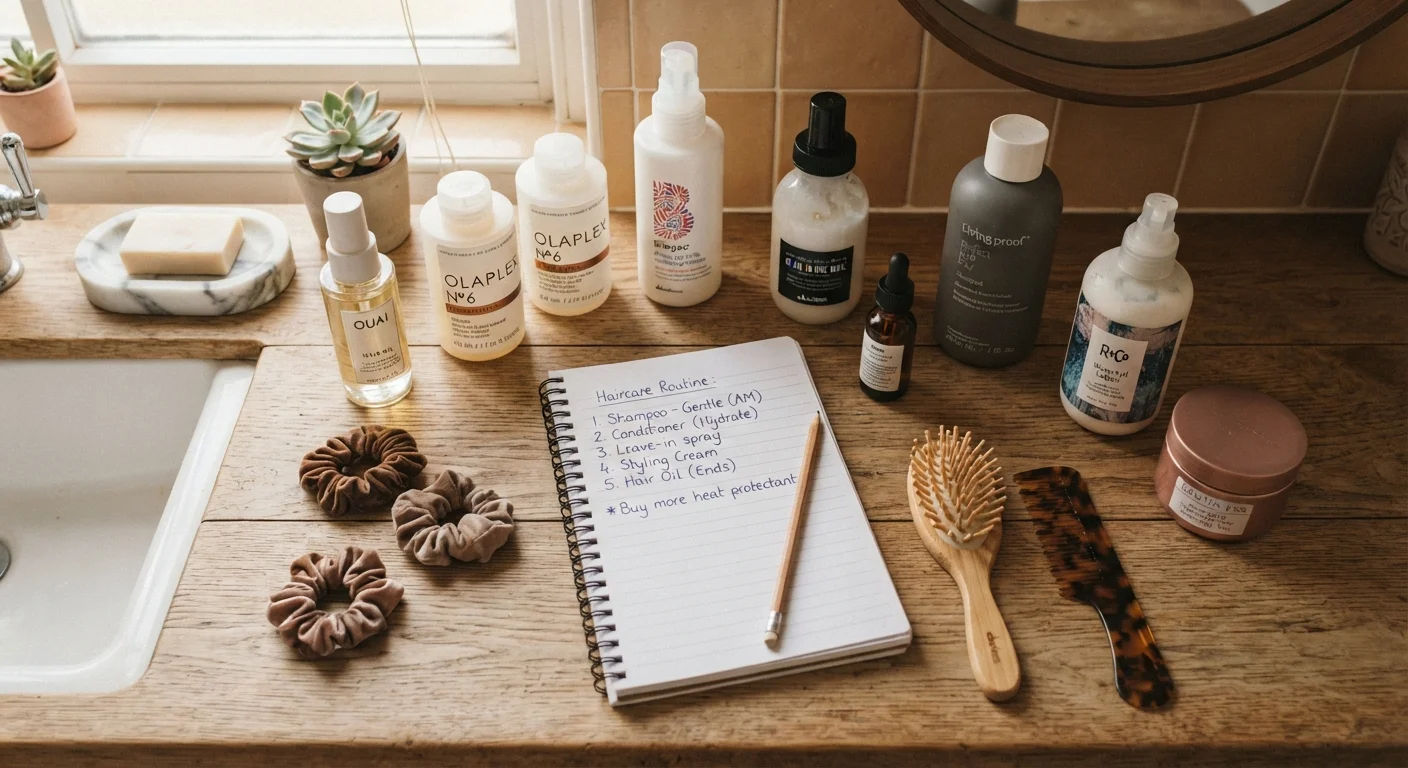
Photo: usewiseguide.com editorial
Key Takeaways
- Most households spend more on haircare than they realize once all products across rooms are counted together.
- Duplicate products and unused bottles are among the most common sources of wasted haircare spending.
- Washing frequency and heat tool habits affect both product consumption and long-term hair health costs.
- A written inventory often reveals that fewer, multi-use products can replace a cluttered lineup.
- Auditing before your next shopping trip prevents repeat purchases of items you already own.
Why a haircare audit is worth your time
Most families track the big budget lines: rent, groceries, utilities. Haircare spending tends to escape scrutiny because individual purchases feel small. A bottle here, a treatment there. When you add up shampoo, conditioner, leave-in products, styling creams, dry shampoo, heat protectant, and the occasional salon visit, the annual total often surprises people.
This checklist works differently from a generic spending review. Instead of starting with bank statements, it starts with physical spaces. You walk through the rooms where haircare products actually live, count what you have, assess what you use, and document what gets wasted. That ground-level view tells you more than a spreadsheet category labeled "personal care" ever could.
For context on fitting haircare into a broader household plan, see the plain-language family budget guide that covers spending by category. Once you finish this audit, haircare habits that save money over time offers practical next steps for putting your findings to use.
Do not discard products before completing the audit
What you need before you start
Gather these items before working through the checklist.
Notepad or printed inventory sheet
Records product names, quantities, and condition as you move through each room.
Pen or pencil
Marks off checklist items and notes observations during the physical walkthrough.
Smartphone or camera
Photographs cluttered storage areas before and after so you can track progress over time.
Last three months of bank or card statements
Provides the spending data needed to complete the financial documentation group.
Simple spreadsheet (paper or digital)
Organizes inventory data by product type and location for easier pattern spotting.
Plan to do the audit in one sitting so you capture every product before anything gets moved or thrown out. If multiple family members use different bathrooms, cover all of them.
The room-by-room audit checklist
Work through each group in order. Check off items as you complete them, and write notes in your inventory sheet as you go. The goal is honest documentation, not immediate decisions about what to keep.
Bathroom inventory
Bedroom and vanity check
Other storage areas
Usage and habit review
Spending documentation
After completing all groups, count how many products you marked as unused or near-empty but repurchased. That number is your baseline waste figure. Even one or two items per month adds up over a year. Before your next haircare purchase, run through the pre-purchase checklist for smarter spending to confirm you are not duplicating something already in your inventory.
What to do with your audit results
Once you have a complete inventory, three patterns typically appear: products you consistently use and finish, products you buy but rarely reach for, and products that overlap in function with something else you own.
For the overlap category, the practical step is to finish one product completely before opening a replacement. If two products do the same job, use one until it is gone before deciding whether to repurchase. This single habit reduces the clutter that drives unnecessary spending.
For products you bought but rarely use, note the purchase price and add it to your waste estimate. That figure is useful when you are tempted by a sale. The pre-purchase checklist covers this scenario directly: a discount on a product you will not finish is not a saving.
Haircare spending is one slice of a broader beauty budget. If you want to apply similar thinking to makeup, the real cost of a full face of makeup article breaks down where the most room for adjustment exists. For home maintenance spending audits that follow the same room-by-room logic, the seasonal home maintenance checklist uses a comparable approach.
The content provided on our blog site traverses numerous categories, offering readers valuable and practical information. Readers can use the editorial team’s research and data to gain more insights into their topics of interest. However, they are requested not to treat the articles as conclusive. The website team cannot be held responsible for differences in data or inaccuracies found across other platforms. Please also note that the site might also miss out on various schemes and offers available that the readers may find more beneficial than the ones we cover.