
Loyalty Programs Explained: Are Store Reward Points Actually Valuable?

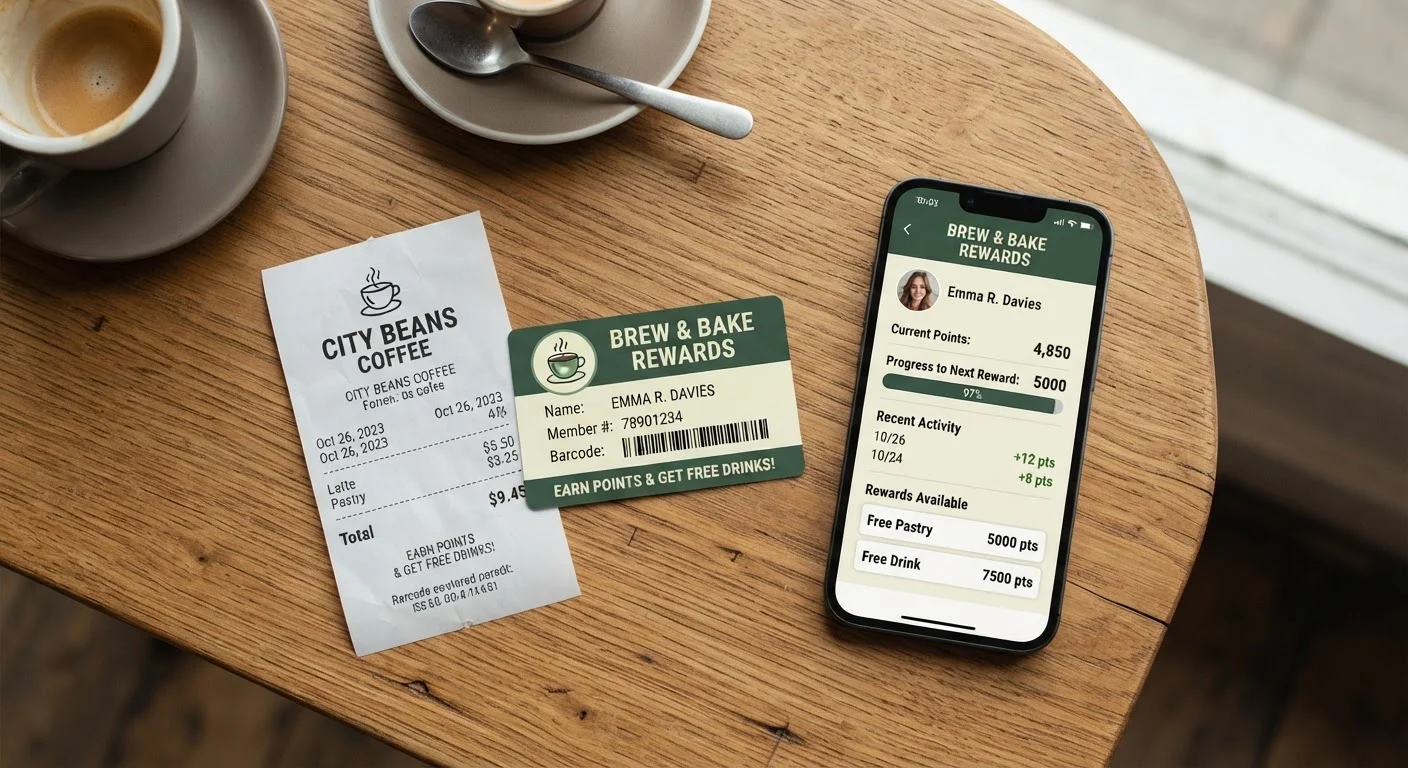
Photo: usewiseguide.com editorial
Key Takeaways
- Most loyalty programs return one to three cents per dollar spent, which adds up slowly.
- Points expiration policies and redemption restrictions can quietly erase accumulated value.
- Programs tied to groceries and gas tend to deliver more consistent value for families.
- Combining loyalty points with coupons or cashback tools can multiply savings meaningfully.
- The programs that require a paid membership deserve extra scrutiny before joining.
Free to join with no spending commitment required
Most grocery and retail loyalty programs cost nothing to enroll in and impose no minimum purchase requirement. This means any reward earned is a net gain against your baseline spending.
Member-only pricing reduces costs automatically
Many supermarket programs apply discounted shelf prices only to cardholders, so the savings are immediate at checkout without any point redemption step involved.
Fuel discount programs offer predictable, tangible returns
Grocery chains that convert spending into cents-per-gallon fuel discounts provide a straightforward and easy-to-verify benefit, often saving $0.10 to $0.30 per gallon when spending thresholds are met.
Points can stack with coupons for larger savings
When a store allows loyalty discounts to combine with digital or paper coupons, the cumulative discount on a single item can exceed what either method achieves alone.
Purchase history enables targeted offers
Many apps use past purchase data to generate personalized coupons on items you actually buy, which can deliver higher value than generic store-wide promotions.
Points expire and are easy to lose
A large share of loyalty programs include inactivity-based expiration windows of 90 to 180 days. Irregular shoppers may accumulate significant balances only to lose them before redemption.
Paid programs can cost more than they return
Membership-fee programs require a clear calculation: if the annual fee exceeds the realistic dollar value of rewards earned, the program is a net cost, not a saving.
Data collection is broad and ongoing
Enrolling in a loyalty program gives the retailer detailed records of your purchase behavior. Shoppers who prefer privacy should review the program's data sharing policy before signing up.
Complex point structures obscure real return rates
Programs that denominate rewards in large point totals (e.g., 500 points per dollar) make it easy to overestimate value. The actual dollar equivalent per point is often a fraction of a cent.
Promotional pressure can increase spending
Double-points events and limited redemption windows are designed to encourage purchases that would not otherwise occur. Spending $30 to earn $1.50 in rewards is not a savings strategy.
How store loyalty programs actually work
A store loyalty program is a structured system where retailers track your purchases and assign points, credits, or discounts in return. Most programs are free to join and use a digital card, app, or phone number to log transactions. The retailer collects purchase data; you receive a percentage of your spending back in some redeemable form.
The most common structures are points-per-dollar (where a fixed number of points converts to a dollar amount), tiered rewards (where higher annual spending unlocks better return rates), and direct cash-back at the register. Some grocery chains issue fuel discounts tied to spending thresholds rather than points, which is a simpler and more transparent model.
Understanding which structure a program uses matters because the redemption mechanics determine whether your rewards are actually accessible. A program offering 1,000 points per $1 saved sounds impressive until you learn the conversion rate is 1,000 points per one cent. Always check the conversion rate before deciding whether a program is worth your attention.
The real advantages
Free to join with no spending commitment required
Most grocery and retail loyalty programs cost nothing to enroll in and impose no minimum purchase requirement. This means any reward earned is a net gain against your baseline spending.
Member-only pricing reduces costs automatically
Many supermarket programs apply discounted shelf prices only to cardholders, so the savings are immediate at checkout without any point redemption step involved.
Fuel discount programs offer predictable, tangible returns
Grocery chains that convert spending into cents-per-gallon fuel discounts provide a straightforward and easy-to-verify benefit, often saving $0.10 to $0.30 per gallon when spending thresholds are met.
Points can stack with coupons for larger savings
When a store allows loyalty discounts to combine with digital or paper coupons, the cumulative discount on a single item can exceed what either method achieves alone.
Purchase history enables targeted offers
Many apps use past purchase data to generate personalized coupons on items you actually buy, which can deliver higher value than generic store-wide promotions.
Free grocery loyalty programs are among the most straightforward: you spend what you would anyway, and the store automatically applies member pricing or accumulates a fuel discount. For a family that spends $600 or more per month on groceries, even a 1% effective return amounts to $72 per year with no behavioral change required.
Stacking is where loyalty programs can outperform simple discounting. When a program allows points to accumulate on top of digital coupons, the combined saving on a single item can reach 20% to 30%. See how coupon stacking fits into a broader savings routine in our family savings system guide.
The real disadvantages
Points expire and are easy to lose
A large share of loyalty programs include inactivity-based expiration windows of 90 to 180 days. Irregular shoppers may accumulate significant balances only to lose them before redemption.
Paid programs can cost more than they return
Membership-fee programs require a clear calculation: if the annual fee exceeds the realistic dollar value of rewards earned, the program is a net cost, not a saving.
Data collection is broad and ongoing
Enrolling in a loyalty program gives the retailer detailed records of your purchase behavior. Shoppers who prefer privacy should review the program's data sharing policy before signing up.
Complex point structures obscure real return rates
Programs that denominate rewards in large point totals (e.g., 500 points per dollar) make it easy to overestimate value. The actual dollar equivalent per point is often a fraction of a cent.
Promotional pressure can increase spending
Double-points events and limited redemption windows are designed to encourage purchases that would not otherwise occur. Spending $30 to earn $1.50 in rewards is not a savings strategy.
The biggest trap is the expiration clock. Many programs expire points after 90 to 180 days of account inactivity, so a family that shops a store seasonally may lose every point accumulated. Read the expiration terms before joining, because retailers are not required to remind you before points disappear.
Paid membership programs add a layer of risk. If the annual fee is $50 and your reward return is $40, you have lost money regardless of how many points the dashboard shows. Calculate your realistic annual spend at that store, apply the stated return rate, and compare it directly to the fee before committing.
When the math works and when it doesn't
Paid vs. free loyalty programs
Programs attached to stores where families spend consistently (grocery chains, warehouse clubs, gas stations) tend to produce the most reliable returns. Programs at specialty retailers, clothing stores, or home goods chains are harder to optimize because spending is irregular and often triggered by promotional pressure rather than routine need.
Changing what you buy or where you shop just to earn points is the most common way loyalty programs cost rather than save money. If a fuel rewards program pushes you toward a premium gasoline grade you would not otherwise choose, the points earned rarely offset the price difference. Treat reward programs as a layer on top of your existing habits, not a reason to change them.
Loyalty points work well alongside other tools. Pairing a store's member pricing with digital coupons at checkout or using a cashback credit card on the same transaction can combine three separate savings mechanisms without extra effort. For a fuller picture of cashback and rebate tools that complement loyalty programs, see our cashback and rebates explainer.
How to get consistent value from loyalty programs
Limit active enrollment to programs at stores where you spend regularly. Two or three programs you actually use will always outperform a wallet full of cards you forget to scan. Set a calendar reminder to check point balances every 60 days so expiration dates don't catch you off guard.
When a program offers a sign-up bonus, take it. A 200-point or $5 bonus for a free enrollment costs nothing and represents an immediate positive return. Just do not let the sign-up bonus become the reason you spend more than planned.
If a program has tiers, check whether the spending threshold for the next tier is within your realistic annual budget. Spending an extra $200 to unlock a tier that returns $4 more per year is not a worthwhile trade. The tier math should be done in dollars saved, not points earned.
1%-3%
Typical cash-back return rate on loyalty spending
Most free retail and grocery loyalty programs return between one and three cents per dollar spent when points are converted to their dollar equivalent.
$175+
Average annual value of grocery loyalty savings per household
The Food Marketing Institute has noted that consistent loyalty card users at supermarkets can accumulate meaningful annual savings through member pricing and fuel discounts combined.
The content provided on our blog site traverses numerous categories, offering readers valuable and practical information. Readers can use the editorial team’s research and data to gain more insights into their topics of interest. However, they are requested not to treat the articles as conclusive. The website team cannot be held responsible for differences in data or inaccuracies found across other platforms. Please also note that the site might also miss out on various schemes and offers available that the readers may find more beneficial than the ones we cover.