
DIY Lawn Care vs. Hiring a Service: Breaking Down What You Actually Pay

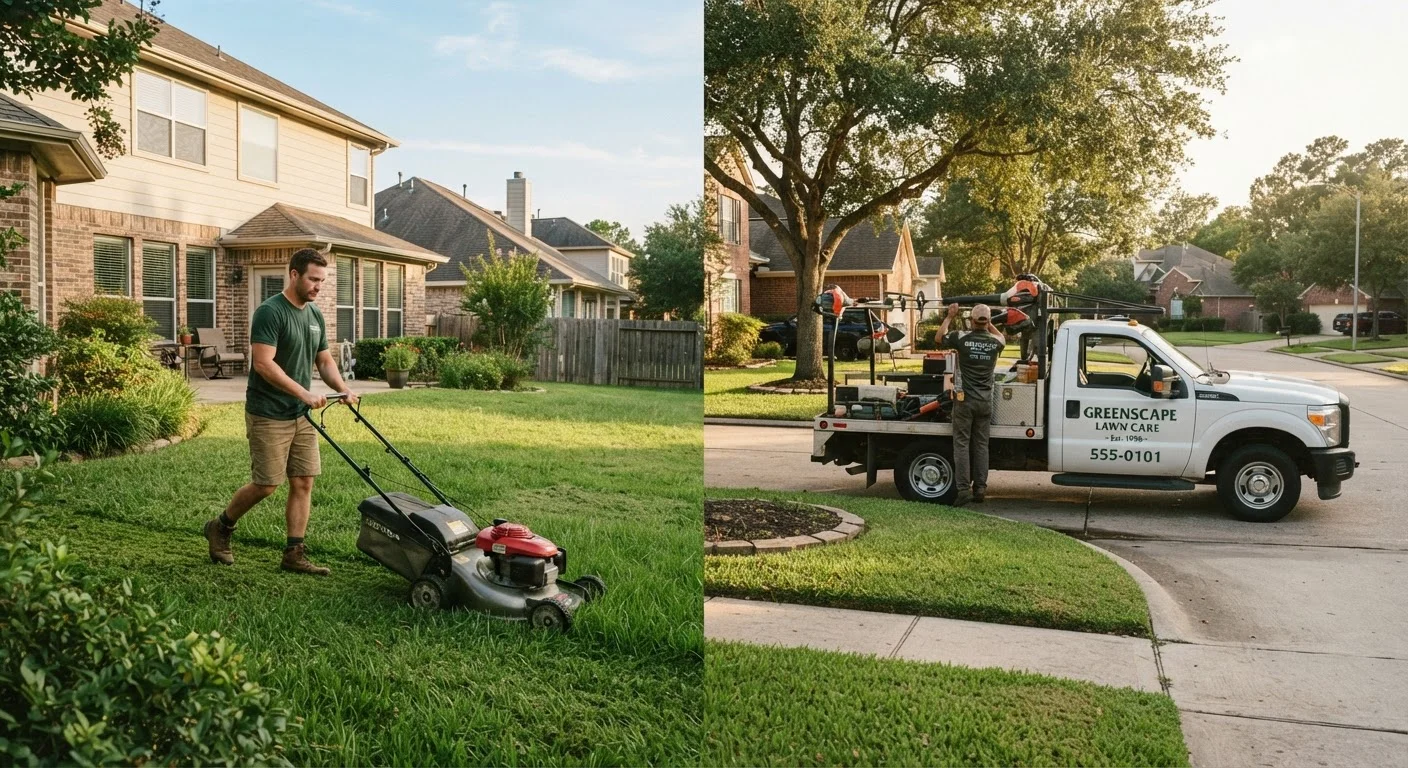
Photo: usewiseguide.com editorial
Key Takeaways
- DIY lawn care costs less per mow but requires an upfront equipment investment that can exceed $500.
- Professional services typically charge $30 to $80 per visit for a standard quarter-acre lot.
- Equipment maintenance, fuel, and storage are recurring DIY costs that families often undercount.
- Time is a real cost: mowing a half-acre can take 2 or more hours per week during peak growing season.
- A hybrid approach, handling routine mowing yourself and hiring out for seasonal treatments, often delivers the lowest total annual spend.
The real upfront cost of going DIY
A gas-powered push mower runs $200 to $400 at most hardware retailers. A self-propelled model climbs to $350 to $600. Add a string trimmer ($80 to $180), an edger ($60 to $150), and a leaf blower ($60 to $150), and a complete starter setup lands between $400 and $1,000 before you cut a single blade of grass.
Riding mowers for larger properties start around $1,500 and can reach $3,500 or more. Battery-powered alternatives carry similar price points but add the consideration of battery replacement costs after several years of use.
These figures do not include storage. If you rent and lack a garage or shed, storing equipment adds either a shed purchase ($300 to $800 for a basic outdoor unit) or a rental storage fee to the total. Renting vs. owning your tools covers when renting equipment outright beats purchasing for infrequent projects, which is worth considering if you only need specialty tools like aerators once a year.
Annual running costs that DIY owners face
Ongoing costs accumulate quickly. Gas for a push mower averages $30 to $60 per season depending on lot size and mowing frequency. Blade sharpening runs $10 to $20 annually if done at a shop. Oil changes, air filter replacements, and spark plugs add another $15 to $30 per season. A new mower blade costs $15 to $40.
Lawn inputs are separate. Fertilizer for a 5,000 square-foot lawn typically costs $40 to $80 per treatment, and most lawns benefit from two to four applications per year. Pre-emergent weed control, overseeding, and lime treatments each add $20 to $60 depending on product and coverage area.
| DIY lawn care | Professional service | |
|---|---|---|
| Typical startup cost | $400 to $1,000 (equipment) | None |
| Annual cost (quarter-acre) | $160 to $320 | $600 to $1,100 |
| Annual cost (half-acre) | $200 to $400 | $1,000 to $1,600 |
| Time required per season | 15 to 30 hours | Minimal (scheduling only) |
| Equipment storage needed | Yes | No |
| Flexibility of scheduling | Full control | Dependent on provider availability |
| Quality consistency | Varies with effort | Generally consistent |
The time factor deserves a hard look. Mowing a quarter-acre lot with a push mower takes roughly 45 minutes to an hour. A half-acre takes 90 minutes to two hours or more. At a pace of every 7 to 10 days during summer, that totals 15 to 30 hours per growing season for mowing alone, not counting trimming, edging, or cleanup.
What professional lawn services actually charge
Pricing for professional mowing varies by region, lot size, and service scope. For a standard quarter-acre suburban lot, most markets see per-visit rates of $30 to $55. A half-acre typically runs $50 to $80 per visit. Weekly service over a 26-week growing season (a common length in mid-Atlantic and Midwestern climates) produces a season total of $780 to $2,080 depending on lot size and local pricing.
Many services bundle mowing with edging and blowing, but fertilization programs, aeration, and overseeding are usually sold as add-ons, often at $50 to $150 per treatment. A full-service lawn program covering mowing plus four fertilizer applications can reach $1,500 to $3,000 per season in higher-cost markets.
Seasonal contracts sometimes lower the per-visit rate by 5% to 15% compared with on-demand pricing, though they require prepayment or a commitment for the full season. See seasonal home maintenance tasks families often overlook for a broader view of which annual tasks are worth building into a household budget.
Get quotes in late winter for better rates
Where the math tips in each direction
For a quarter-acre lot, DIY equipment costs amortized over seven years (a reasonable mower lifespan) average $60 to $140 per season. Add running costs of $100 to $180 per season for fuel, maintenance, and basic inputs, and total annual DIY spending lands around $160 to $320. Professional mowing for the same lot size at $40 per visit, 20 visits per year, costs $800.
The DIY savings are real, but they assume the equipment lasts, is maintained properly, and that the time spent mowing carries no meaningful opportunity cost. For households where weekend hours are already stretched, that assumption deserves scrutiny.
On a half-acre or larger lot, the DIY gap widens further. Professional mowing at $65 per visit over 20 visits equals $1,300 per season. Even after equipment costs, DIY typically runs $200 to $400 per season for inputs and maintenance, producing savings of $800 to $1,100 annually. At that scale, equipment pays for itself within two to three seasons.
Making a hybrid approach work
A practical middle path is handling routine mowing yourself while hiring professionals for labor-intensive seasonal tasks: core aeration, dethatching, and dormant overseeding. These jobs require equipment that is expensive to own but inexpensive to hire out a few times a year.
Renting a core aerator for a single fall application costs $70 to $100 per day at most equipment rental locations. Paying a service to aerate typically runs $80 to $150 for a quarter-acre lot. The rental option saves money for one application; the service saves time and storage hassle.
Families who spend time tracking costs across all household projects often find parallels between lawn care decisions and vehicle decisions. The underlying logic in DIY vs. shop car maintenance tasks applies here too: straightforward, repeatable tasks favor doing it yourself, while specialized or infrequent tasks favor paying for expertise and equipment.
Before committing to either path for the season, add up actual lot square footage, count the realistic number of mow cycles in your climate zone, and assign an honest dollar amount to the hours involved. That calculation, not a general rule, determines which approach costs less for your household.
The content provided on our blog site traverses numerous categories, offering readers valuable and practical information. Readers can use the editorial team’s research and data to gain more insights into their topics of interest. However, they are requested not to treat the articles as conclusive. The website team cannot be held responsible for differences in data or inaccuracies found across other platforms. Please also note that the site might also miss out on various schemes and offers available that the readers may find more beneficial than the ones we cover.