
DIY vs. Shop: Which Car Maintenance Tasks Are Worth Doing Yourself

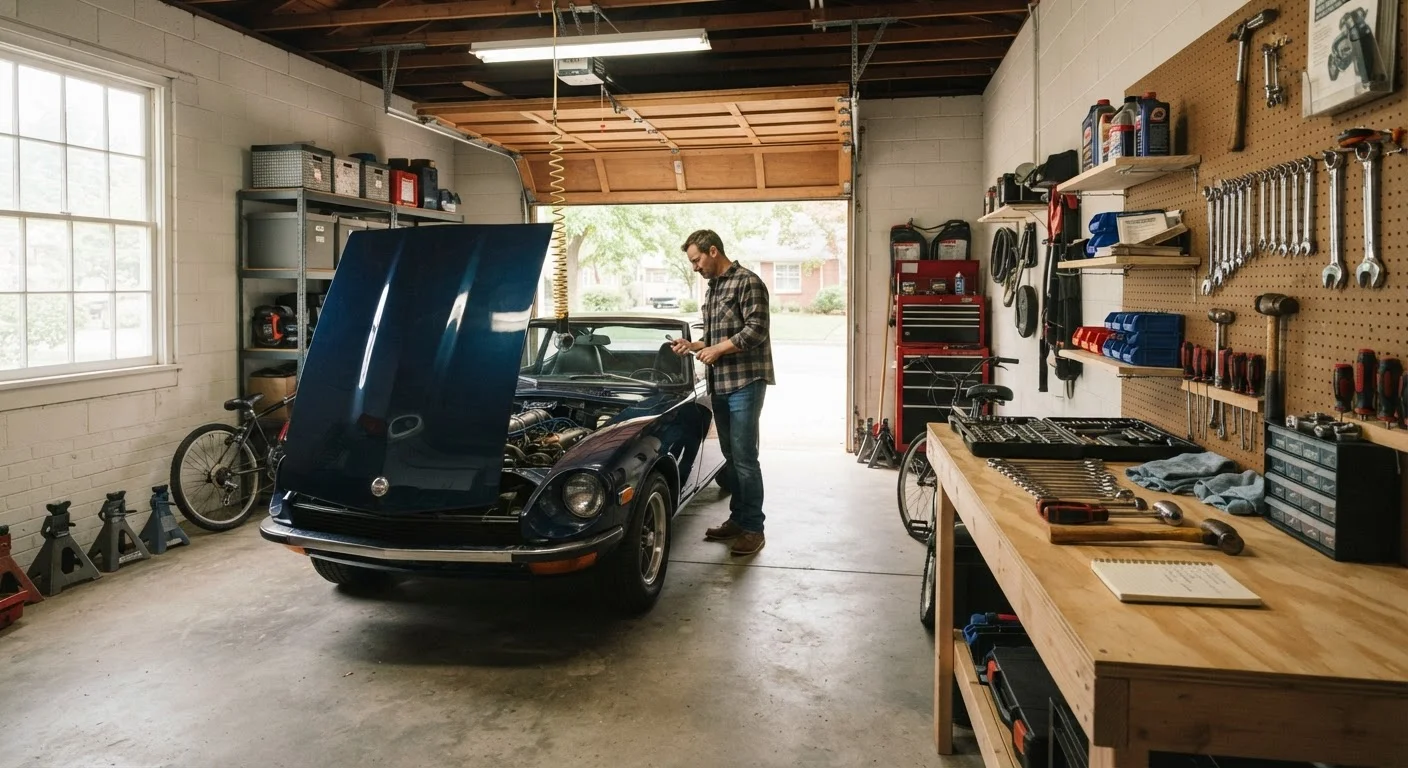
Photo: usewiseguide.com editorial
Key Takeaways
- Several routine maintenance tasks are genuinely safe for most drivers to handle at home with basic tools.
- Some repairs carry real safety or warranty risks if done incorrectly and belong with a qualified mechanic.
- The real cost of DIY includes tools, time, and the risk of mistakes, not just parts prices.
- A shop is not always the more expensive choice when you factor in warranty labor rates and diagnostic equipment.
- Matching the task to your skill level is the most reliable way to avoid costly errors.
How to think about the DIY vs. shop decision
The question is not simply whether you can do a job yourself. It is whether doing it yourself produces a reliable result at a total cost that is actually lower than a shop would charge. That total cost includes the tools you need to buy, the time the job takes, and the financial exposure if something goes wrong.
Three factors determine where a task falls. First, how much skill and tool access does the job require? Second, what is the consequence of a mistake: an inconvenience or a safety risk? Third, does your vehicle's warranty or extended service contract require documented professional service? Getting those three questions answered before you pop the hood will prevent most of the costly errors that turn a $20 part into a $400 repair.
For a broader view of how maintenance decisions fit into overall vehicle costs, see our guide to reducing auto ownership costs.
Tasks that are reasonable to do yourself
Several jobs require only basic tools, carry low safety stakes, and have clear pass/fail checks you can do without diagnostic equipment.
- Engine air filter replacement. On most vehicles this is a matter of unclipping a housing, pulling the old filter, and pressing in the new one. The job takes under ten minutes and the filter itself is inexpensive. A clogged air filter measurably reduces fuel economy, so the savings case is real.
- Wiper blade replacement. Manufacturers sell blades with installation instructions printed on the packaging. No tools needed. Inspect blades each fall and spring; seasonal vehicle checks cover this and other weather-related items in more detail.
- Cabin air filter replacement. Usually located behind the glove box, this filter affects interior air quality and HVAC performance. Most owners can swap it in under fifteen minutes with a screwdriver.
- Fluid top-offs. Checking and topping off washer fluid, coolant reservoir level, and power steering fluid (where applicable) is straightforward. Always use the fluid type specified in the owner's manual; mixing types can cause damage.
- Battery terminal cleaning. Corrosion on battery terminals can cause starting problems. A mixture of baking soda and water, a wire brush, and basic safety precautions (disconnect negative first) handle the job safely for most drivers.
Oil changes occupy a middle ground. The parts cost less than a shop charges, but the job requires a floor jack, jack stands, a drain pan, and a way to dispose of used oil. Whether it pays off depends on how often you change oil and whether you already own the equipment. Thinking through tool costs vs. rentals can help you decide before buying gear you may use only twice a year.
| Task | DIY viability | Typical tool requirement | Risk if done wrong | |
|---|---|---|---|---|
| Engine air filter | High | None or minimal | Low | |
| Wiper blade replacement | High | None | Very low | |
| Cabin air filter | High | Basic screwdriver | Low | |
| Oil change | Moderate | Jack, stands, drain pan | Moderate if done incorrectly | |
| Brake pad replacement | Low to moderate | Caliper tool, torque wrench | High - safety system | |
| Timing belt service | Low | Engine-specific tools | Very high - engine damage | |
| Wheel alignment | Not practical at home | Alignment rack required | High - handling and tire wear | |
| A/C refrigerant service | Not legal without certification | EPA 609 cert required | Legal and safety risk |
Tasks that belong in a professional shop
Some jobs are genuinely unsafe to attempt without training, specialized equipment, or both. Others involve systems where an undetected error will not show up until the vehicle fails at the worst possible moment.
- Brake system work. Replacing brake pads is often cited as a beginner DIY job, and mechanically it is not complex. However, improper bedding-in of pads, failure to compress the caliper correctly, or leaving air in the hydraulic line after any line work can reduce stopping power. For most drivers, having brakes inspected and serviced by a qualified mechanic is worth the cost.
- Wheel alignment and suspension components. Replacing a worn tie rod or ball joint requires torque specs, alignment after the fact, and an understanding of what other components to inspect while you are in there. A shop with an alignment rack will confirm the geometry is correct; there is no reliable way to verify that at home.
- Timing belt or chain service. This is one of the most consequential maintenance items on many engines. An error during installation can cause catastrophic engine damage. The job also often requires engine-specific tools. Professional service is the reliable choice.
- Electrical diagnosis. Modern vehicles have multiple interconnected control modules. Diagnosing a fault code correctly often requires manufacturer-level scan tools that go beyond generic OBD-II readers. Guessing at an electrical fault and replacing parts without a confirmed diagnosis wastes money.
- Air conditioning service. Handling refrigerant is regulated under federal law in the United States. Only EPA Section 609-certified technicians may purchase the refrigerants used in automotive A/C systems.
This article provides general educational information about vehicle maintenance. It is not a substitute for advice from a qualified mechanic familiar with your specific vehicle. Always consult a licensed professional for repairs that affect vehicle safety.
The real cost calculation
A shop quote feels expensive in the moment. DIY feels cheap. Neither impression is always accurate.
When you pay a shop, you get labor warranty on the work, access to diagnostic tools, and the mechanic's liability if something goes wrong as a direct result of their service. When you do the work yourself, you absorb all of that risk. A mistake on a brake job or a timing service can cost far more than the original shop quote would have.
The tasks where DIY clearly wins are ones you will repeat often enough to justify any tool investment, where the instructions are unambiguous, and where a mistake is obvious and correctable before it causes further damage. The tasks where a shop clearly wins are ones where the cost of a mistake is high, where correct completion requires equipment you cannot reasonably own, or where your vehicle's warranty terms require documented professional service.
Families who approach this honestly will likely find that a hybrid approach, handling a handful of simple jobs themselves and using shops for everything safety-critical, produces the lowest total cost of ownership over the life of a vehicle. That is the same logic that applies to home upkeep; the DIY vs. hiring out analysis in lawn care covers the same cost framework in a different context.
The content provided on our blog site traverses numerous categories, offering readers valuable and practical information. Readers can use the editorial team’s research and data to gain more insights into their topics of interest. However, they are requested not to treat the articles as conclusive. The website team cannot be held responsible for differences in data or inaccuracies found across other platforms. Please also note that the site might also miss out on various schemes and offers available that the readers may find more beneficial than the ones we cover.