
Renting vs. Owning Your Tools: What Makes Financial Sense for Home Projects

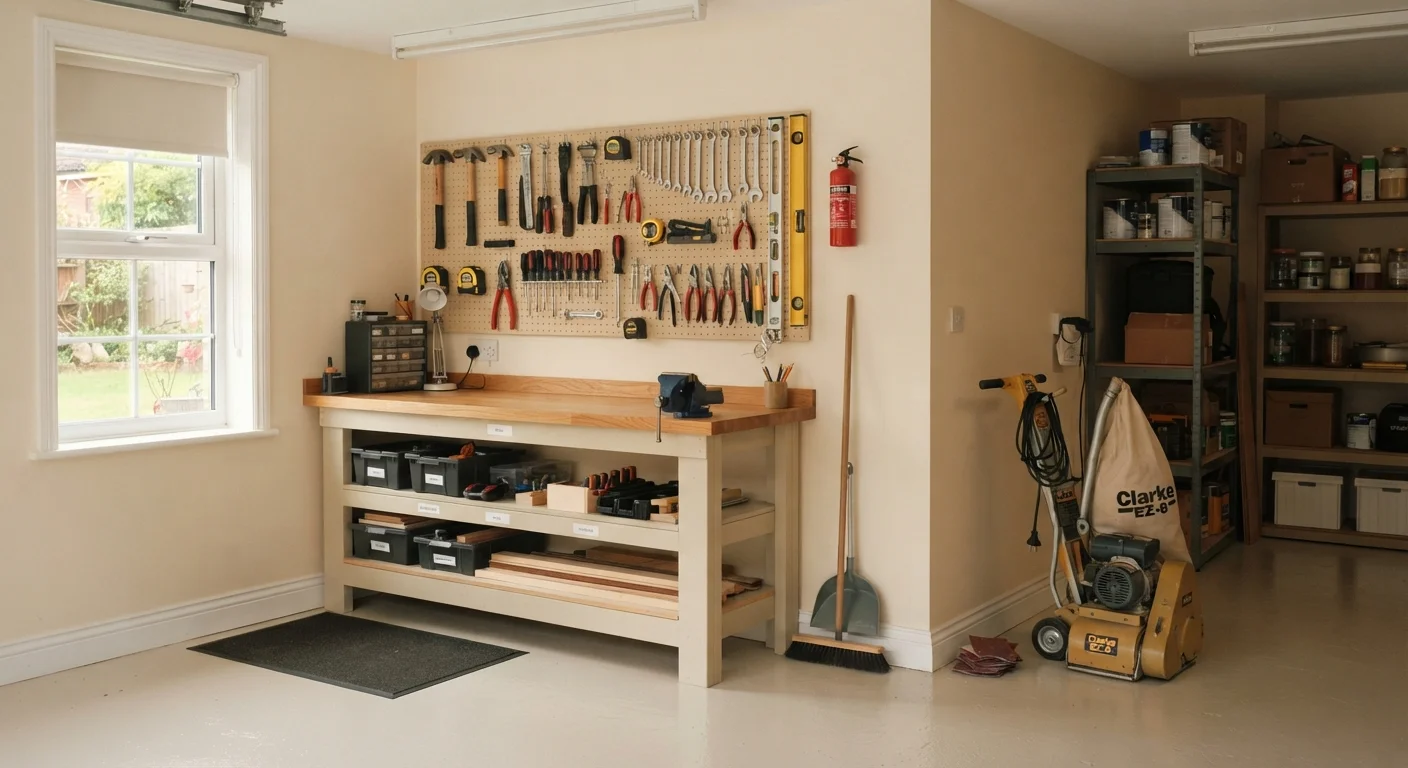
Photo: usewiseguide.com editorial
Key Takeaways
- Renting costs less upfront but adds up quickly if you use the same tool more than two or three times a year.
- Owning pays off for tools used across multiple projects or seasons over several years.
- Specialized, large, or infrequently needed equipment is almost always cheaper to rent than to buy.
- Storage space, maintenance costs, and safety requirements all factor into the true cost of ownership.
- A simple break-even calculation, comparing rental fees against purchase price, helps you decide before spending.
The core question: how often will you actually use it?
Before spending money either way, answer one question honestly: how many times per year will you use this tool? That single number drives almost every cost comparison between renting and owning.
A floor sander rented for a weekend might cost $60 to $100 per day, but buying one runs $300 or more, and it takes up storage space year-round. If you sand floors once every five years, renting wins easily. A corded drill you use monthly for hanging shelves, assembling furniture, and seasonal repairs is a different story entirely. At even $15 per rental visit, five uses per year totals $75, and most entry-level drills cost $50 to $80 outright.
This break-even logic applies across almost every tool category. Divide the purchase price by the per-rental cost to find how many uses it takes to break even. If you expect to cross that number within two years, buying generally makes financial sense. For tools you will use fewer times than that, renting keeps more cash in your pocket.
For families juggling multiple projects, it also helps to think about the full picture of ownership costs. Budgeting decisions across home projects follow a similar logic: some purchases are investments, others are unnecessary overhead.
When renting makes clear financial sense
Certain tools belong in the rental category for most households, regardless of project frequency.
Large, specialized equipment such as tile saws, augers, plate compactors, and pressure washers costs several hundred to several thousand dollars to buy. Rental centers typically charge $40 to $150 per day for this category. Unless you run a landscaping side business or regularly renovate rooms, buying these tools produces a poor return on your money.
Safety is another factor. Equipment that requires training or protective gear, concrete saws or heavy-duty chippers for instance, brings liability and injury risk if stored or used improperly at home. Rental staff often provide basic operating guidance as part of the transaction, which reduces that risk for occasional users.
Seasonal tools with a narrow window of use also favor renting. A thatching rake or core aerator gets used once or twice per year in most climates. Buying one means storing a large, single-purpose item for 50 weeks to use it for two. The real costs of lawn equipment ownership often surprise homeowners once storage, sharpening, and seasonal servicing enter the calculation.
| Criterion | Renting tools | Owning tools |
|---|---|---|
| Upfront cost | Low, pay per use | Higher one-time purchase |
| Best for frequency | 1 to 2 uses per year | 3 or more uses per year |
| Storage required | None | Yes, varies by tool size |
| Maintenance responsibility | Handled by rental center | Owner's responsibility |
| Availability | Subject to rental center stock | On hand whenever needed |
| Ideal tool type | Large, specialized, or seasonal | Versatile, frequently used |
When owning is the smarter long-term choice
Ownership makes sense when frequency and versatility align. A quality hand tool set, a corded drill, a circular saw, or a reliable shop vacuum are examples of items that appear in project after project, season after season. Buying them once and maintaining them properly spreads the cost across years of use.
Convenience also has financial value. Renting requires a trip to the rental center, returning the item on time, and working within rental windows. Families mid-project on a Saturday afternoon cannot always afford to stop because a rental period expired. Owning removes that constraint and lets you work at your own pace without added daily fees.
Maintenance costs are real but manageable for most hand and mid-range power tools. Blade replacements, oiling, and periodic cleaning are low-cost tasks. The seasonal upkeep routines that keep a home in good condition often rely on the same core tools repeatedly, which means a modest owned toolkit earns its cost across many projects.
For broader household budgeting context, the same ownership-versus-rental calculus appears in other spending areas. Buying used vs. new is a related decision framework that helps families allocate money where it produces the most durable value.
The content provided on our blog site traverses numerous categories, offering readers valuable and practical information. Readers can use the editorial team’s research and data to gain more insights into their topics of interest. However, they are requested not to treat the articles as conclusive. The website team cannot be held responsible for differences in data or inaccuracies found across other platforms. Please also note that the site might also miss out on various schemes and offers available that the readers may find more beneficial than the ones we cover.