
Decoding Your Car's Maintenance Schedule

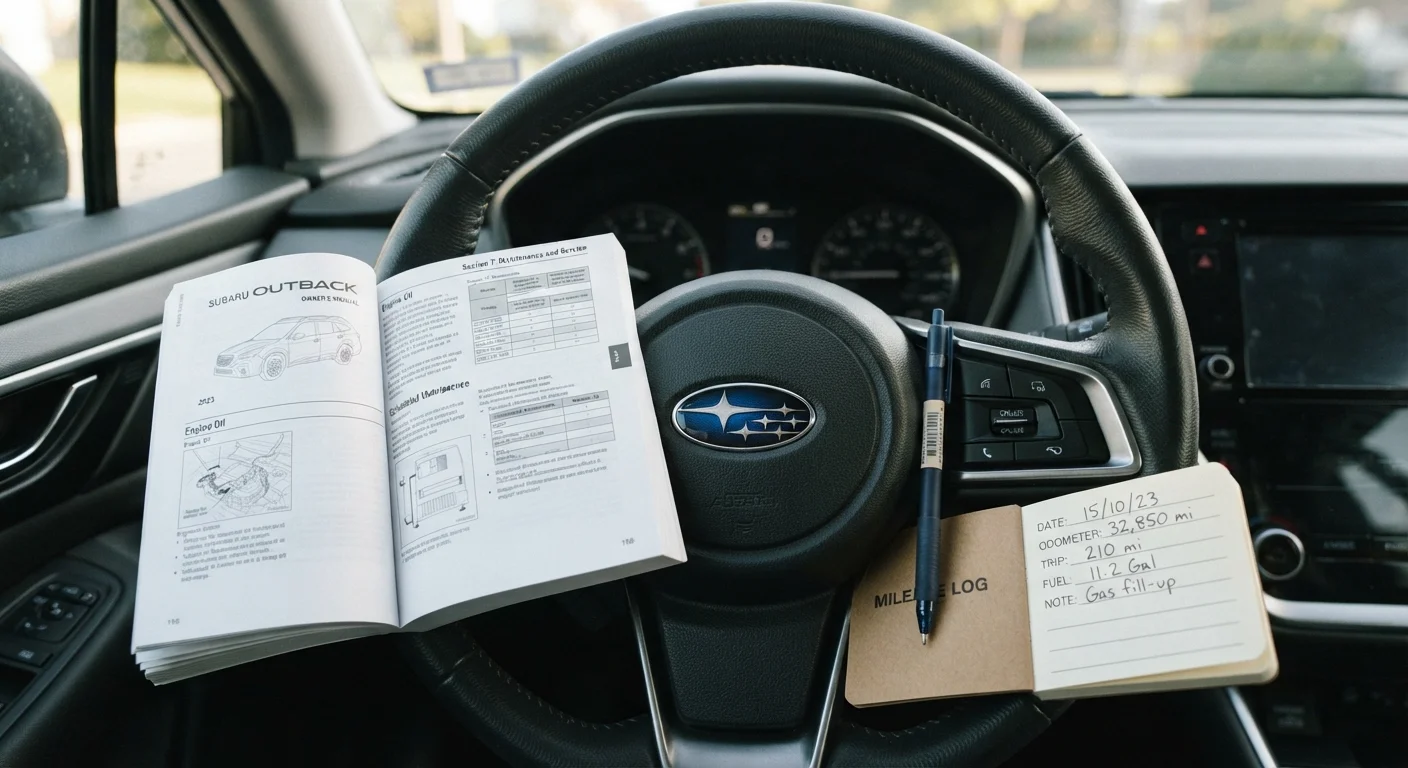
Photo: usewiseguide.com editorial
Key Takeaways
- Your owner's manual contains the manufacturer's actual recommended intervals, not a shop's upsell schedule.
- Most modern vehicles use oil change intervals of 5,000 to 10,000 miles or more, not the old 3,000-mile rule.
- Severe driving conditions (short trips, extreme heat, towing) shorten several service intervals.
- Tracking mileage against a simple log prevents both missed services and unnecessary early spending.
- Skipping manufacturer-recommended maintenance can void powertrain warranties.
Why your owner's manual is the only schedule that matters
Walk into a quick-lube shop and the service advisor may hand you a printed checklist with intervals that differ from what your automaker specifies. Those shop schedules are often built around upsell opportunities, not engineering data. Your owner's manual contains the intervals your car's designers tested and validated. That document is the authoritative source.
Automakers publish two types of schedules: one for normal driving and one for severe driving. The normal schedule applies to the majority of highway and mixed-use drivers. The severe schedule applies when conditions put extra stress on fluids and components. Both are in the manual, and both matter depending on how and where you drive.
Following the manufacturer's schedule also matters for warranty purposes. Many powertrain warranties require documented adherence to specified intervals. Skipping or substantially delaying a service the manufacturer requires can give an insurer or dealer grounds to deny a warranty claim on a related component.
This article is part of a broader look at reducing auto ownership costs over the life of a vehicle.
Maintenance interval
The mileage or time period after which a specific service is due, as specified by the vehicle manufacturer.
Severe duty schedule
A shorter service interval used when driving conditions place extra stress on fluids and components, such as frequent short trips or towing.
Viscosity
A measure of how thick or thin a fluid is. Engine oil viscosity changes as oil ages and heats, affecting how well it lubricates moving parts.
Powertrain warranty
A manufacturer's guarantee covering major mechanical components like the engine and transmission, often conditional on documented maintenance.
Coolant
A liquid that circulates through the engine to regulate temperature and prevent freezing or overheating. It degrades over time and must be replaced.
What the common service intervals actually do
Understanding what each service accomplishes makes it easier to judge whether it is due, overdue, or genuinely optional at a given mileage.
- Engine oil and filter: Oil lubricates moving engine parts and carries away combustion byproducts. As it ages, it loses viscosity and accumulates contaminants. The interval varies by oil type (conventional, synthetic blend, or full synthetic) and engine design. For detail on how manufacturers set this interval, see what your oil change interval is actually based on.
- Cabin and engine air filters: The cabin filter keeps dust and pollen out of the passenger compartment. The engine air filter protects the intake. Both have mileage-based replacement intervals; clogged filters reduce airflow and efficiency.
- Tire rotation: Front and rear tires wear at different rates depending on whether the vehicle is front-, rear-, or all-wheel drive. Rotating tires on schedule evens wear and extends the set's total life.
- Brake fluid: Brake fluid absorbs moisture over time, which lowers its boiling point and can cause spongy pedal feel. Many manufacturers recommend replacement on a time-based interval (often every two to three years) rather than mileage alone.
- Transmission fluid: Automatic and manual transmissions each have their own fluid type and interval. Neglecting this service is one of the more expensive mistakes owners make, since transmission rebuilds can cost several thousand dollars.
- Spark plugs: Modern iridium or platinum plugs can last 60,000 to 100,000 miles. Worn plugs reduce combustion efficiency and can cause rough idling or misfires.
- Coolant flush: Coolant degrades and becomes acidic, which corrodes metal components. The flush interval varies by coolant type; older green coolant often calls for shorter intervals than extended-life formulas.
Normal vs. severe driving conditions
Most owner's manuals define severe conditions as including frequent short trips under five miles, extended idling, towing or hauling near the vehicle's rated capacity, operation in extreme temperatures, and driving on dusty or unpaved roads. If your daily commute consists of short cold-start trips in stop-and-go traffic, the severe schedule may apply even though you are not doing anything that sounds extreme.
Short trips are particularly hard on oil because the engine never fully warms up, which prevents moisture from burning off. That moisture mixes with combustion gases to form acids that degrade oil faster than highway miles do.
Paired with your oil change timing, seasonal factors also affect inspection priorities. Seasonal vehicle checks cover how cold winters and hot summers stress different systems so you can time inspections alongside scheduled services rather than treating them as separate tasks.
Check both columns in the manual
How to track and stay ahead of your schedule
A simple mileage log removes guesswork. Record the odometer reading and date each time you complete a service, along with what was done. A notes app, a spreadsheet, or a paper log in the glove box all work. The format matters less than consistency.
From your current odometer reading, calculate the mileage at which each upcoming service falls due and note it. When the reading gets within a few hundred miles, schedule the appointment. This prevents the common pattern of falling several thousand miles behind on multiple services at once.
Some vehicles include an onboard maintenance reminder system that calculates oil life and other intervals based on actual driving data. That system is useful but should be cross-checked against the manual, since it may not track every service (transmission fluid and coolant flushes, for example, often require manual tracking).
For tasks within the skill range of a careful home mechanic, doing some services yourself can reduce labor costs. The DIY vs. shop guide covers which jobs are reasonable to tackle at home and which ones carry enough risk to warrant professional work.
Frequently Asked Questions
The content provided on our blog site traverses numerous categories, offering readers valuable and practical information. Readers can use the editorial team’s research and data to gain more insights into their topics of interest. However, they are requested not to treat the articles as conclusive. The website team cannot be held responsible for differences in data or inaccuracies found across other platforms. Please also note that the site might also miss out on various schemes and offers available that the readers may find more beneficial than the ones we cover.